

Get Started
Get Started


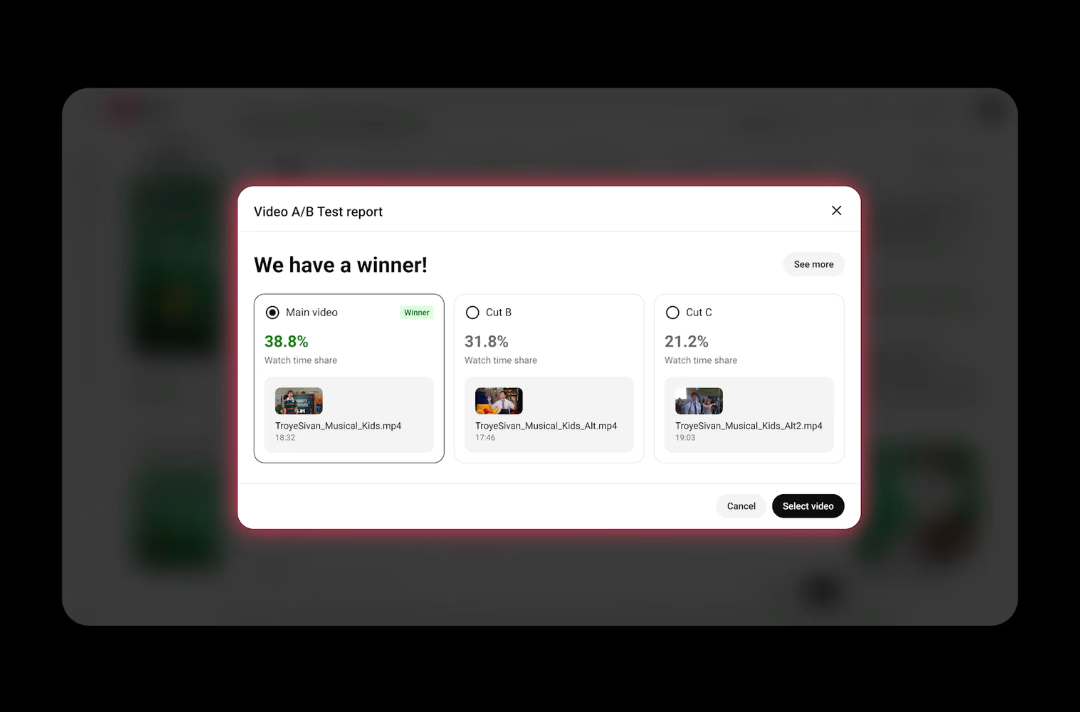
Every podcast host has argued about the first minute of an episode. Do you open with a quote, a question, or the usual intro? Until now the answer was a guess backed by gut feeling. At Made on YouTube on September 23, YouTube announced a feature that is meant to replace the guess with data.
A/B testing for video cuts. YouTube says creators will be able to use video A/B testing to try up to three different cuts and see which holds audience attention best. TechCrunch describes it as testing up to three opening hooks, and The Publish Press describes testing "different hooks, pacing, or storylines." According to 80.lv, YouTube will show a report with analytics for each cut, including watch time share, and highlight the best performer.
Dynamic thumbnails. Creators will be able to generate three thumbnail options and show each to a different segment of their audience. TechCrunch reports YouTube will later monitor thumbnail performance automatically and swap in a new one if it is not working. This builds on thumbnail testing YouTube introduced in 2024.
The timing question. Reports disagree. The Publish Press and 80.lv put the video cuts feature in 2027, while TechCrunch said later this year, and the dynamic thumbnail rollout is described as later in 2026. YouTube has not detailed eligibility or exactly how a winner is declared, so treat the specifics as provisional.
Long-form conversation is where openings matter most. When podcast viewers skim long-form video, the first moments decide whether someone commits to the rest of the episode. A tool that tests those moments against each other speaks directly to the problem podcasters on YouTube already have.
YouTube has not published controls or limits, so this framework is ours. It works whether you use the built-in tool when it arrives or compare episodes by hand today.
1. Test the opening and nothing else
Change one variable. Cut A opens with the strongest quote from the episode. Cut B goes straight into the usual host intro. Cut C opens with the question the episode answers. Same guest, same body, same title, same thumbnail. If more than one thing changes, you will not know what worked.
2. Judge by watch time, not views
A high view count only tells you the opening got people to click. Watch time share tells you whether it kept them. This matters even more given how YouTube counts views now, since a view alone says less than it used to.
3. Do not assume polish wins
Production value is not a hook. As we have seen elsewhere, a polished trailer can lose to a rawer one. Test a produced cold open against a plain, honest one and let the data decide.
4. Keep a test log
One episode is noisy. Record which opening style you used and the watch time result for each episode, then look for patterns across five or ten episodes before you change your format.
Start cutting alternate openings in the edit now. The same material that works as an opening hook often works as a clip, so your tests can double as podcast clips as a discovery engine. When dynamic thumbnails arrive, plan three genuinely different concepts, not three crops of the same frame. Different segments only respond differently if the options are actually different.
YouTube has not said how much audience a test needs, whether every channel will get access, or how long a test runs. Small channels may see noisier results than large ones. Use the tool to sharpen your instincts, not to replace editorial judgment about what the episode is for.
Want help turning your episodes into a repeatable testing habit, from openings to thumbnails to clips? Talk to Poddster about a video podcast workflow built around what actually keeps viewers watching.


