

Get Started
Get Started


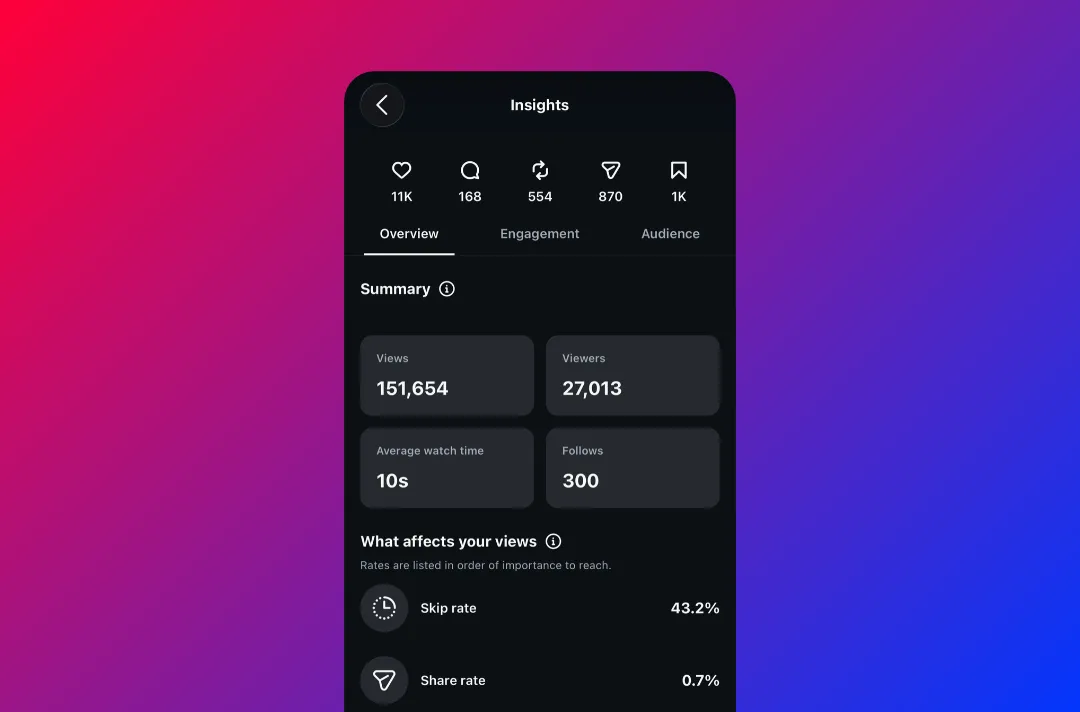
It's tempting to look at a podcast clip's view count the same way you'd look at a full episode's download number: as a scoreboard. That instinct is understandable and also wrong. Sounds Profitable's 2026 research into how people actually discover and consume podcast content makes a specific case that clips and full episodes aren't competing for the same job, and treating them as if they were leads to the wrong conclusions about what's working.
According to Sounds Profitable's Podcast Atlas research, 89% of podcast listeners watch clips on social platforms at least sometimes, and 74% of them give those clips full or near-full attention, a figure not far off the 77 to 81% attention range full episodes get. YouTube (67%), TikTok (63%) and Facebook (62%) are where clip-watching happens most often, which tells you clips are living in feeds people already check constantly, not in destinations they have to seek out.
The part that actually matters for how you measure success: roughly a third of clip viewers reliably convert into regular listeners or go find the full episode. That's not a vanity number. It means a healthy share of everyone watching your clip is doing real work for your show beyond the thirty seconds they spent on it.
A follow-up study from Sounds Profitable found that 73% of listeners say they would follow a creator or show across formats, meaning across audio, video, and short clips, rather than committing to just one. Read alongside the original clips data, that's a consistent picture: audiences don't experience a show as one format anymore. They bounce between a clip in a feed, a full video episode, and an audio-only listen depending on where they are and how much time they have, and they consider all of that the same relationship with the same show.
If a client asks whether their clips are "working," the honest answer requires looking past the clip itself. A clip with a modest view count that reliably sends people to the full episode is doing exactly its job. A clip that racks up views but never converts anyone into a listener is a different, more common problem, and it's one you'd miss entirely if clip views were the only number on the report.
1. Report on trial and follow-through, not clip views in isolation
Track episode plays, subscribes, and follows that happen after clip exposure, not just how many people saw the clip. That's the number that tells you whether the clip did its actual job.
2. Treat the clip's usage context as part of the strategy
Clips get watched most while people are scrolling other social platforms or killing time waiting for something. Write and cut clips for that context specifically, a clear hook in the first two seconds, not a highlight that assumes a captive, seated audience.
3. Expect audiences to move between formats, and plan for it
With 73% of listeners saying they'll follow a show across formats, a clips strategy and a full-episode strategy aren't two separate workstreams competing for the same attention. They're two doors into the same room.
For a client asking whether clip production is worth the investment, the honest framing is that clips are a distribution and discovery tool, not a KPI to hit on their own. A show that under-invests in clipping is leaving its most scalable discovery channel unused, since clips are increasingly how new platforms are trying to attract podcast content in the first place. The goal isn't a viral clip. It's a clip that reliably hands a stranger off to your actual show.
Not sure whether your show's clips are actually converting into listeners, or just racking up views that go nowhere? Talk to Poddster about building a clipping and distribution strategy that tracks the number that actually matters.


