

Get Started
Get Started


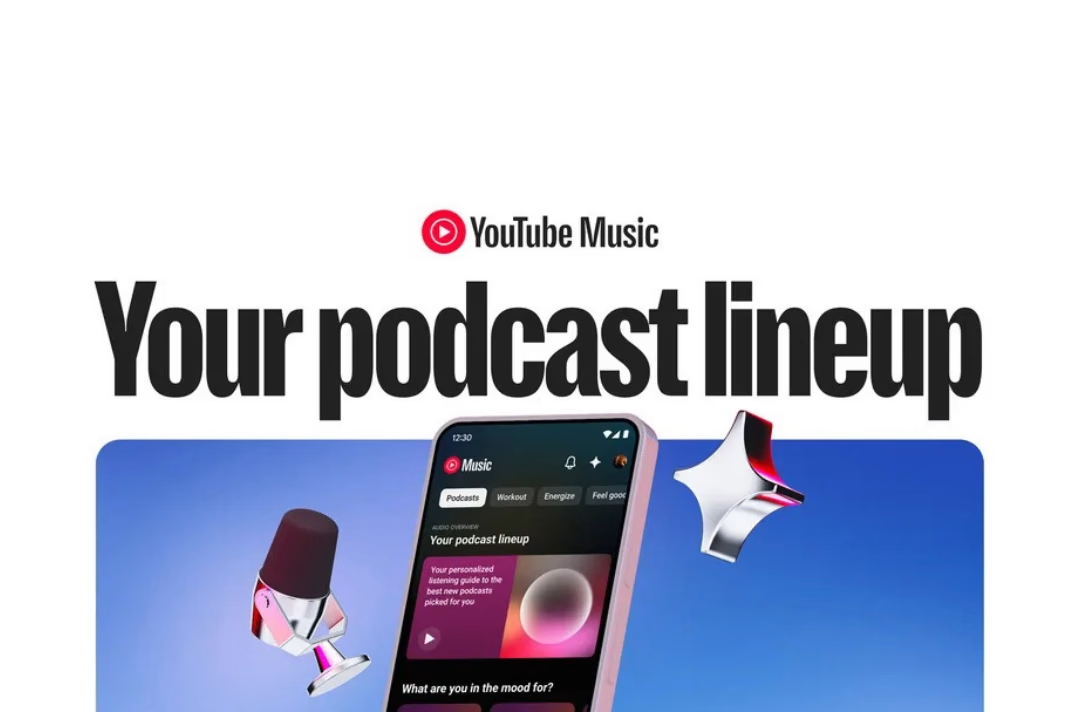
At its annual Made on YouTube event on September 23, YouTube announced a set of features that, read together, say something specific about podcasts: the platform wants viewers to ask for what they want to hear, and it wants to answer with a short list instead of an endless scroll. For anyone making a show, that changes what it means to be discoverable.
Custom feeds. Viewers will be able to create dedicated homepage tabs by describing a preference in conversation, such as "evening wind down with long documentaries" or "new DIY creators." YouTube's own example for podcasts is "Witty podcasts for my daily 30-minute commute." Per 9to5Google, custom feeds are coming soon to US users on web, mobile, and TV.
Your podcast lineup. Inside YouTube Music, a new AI-audio guide will deliver a quick, weekly spoken preview of recommended shows, explain why a listener might like them, and then jump into the suggested episodes. YouTube describes it as eyes-optional and hands-free, and says it is coming soon to YouTube Music and Premium subscribers worldwide. TechCrunch notes Spotify recently launched a similar AI-powered feature that builds personal podcast episodes from a listener's interests and prompts.
Ask Music. A conversational feature inside YouTube Music that works across podcasts and a catalog of over 300 million songs, letting listeners shape their queue by asking for what they want.
YouTube was already becoming the front door for podcast discovery. These announcements add a layer on top of that: instead of a viewer scanning thumbnails, an assistant is now doing the matching. That is a different kind of competition. A thumbnail has to win a glance. A show now has to win a description, because the viewer is typing or saying one.
It also fits a broader pattern in how podcast discovery really works in 2026: more discovery now happens on platforms like YouTube and through recommendations, and less of it happens inside podcast apps.
YouTube has not explained how its systems rank or match shows to requests. Everything below is our read of what the announced examples imply, not official guidance.
1. Make your show describable in one sentence
If a viewer typed a request that your show should obviously win, would a stranger agree? A show with a sharper angle is easier to match to a specific request than a general show about a broad topic. This is the same advice we would give for any discovery channel, but a prompt-driven feed makes it more pressing.
2. Write the specifics down
Look at what the announced prompts have in common: a tone, a use case, and a length. Your show and episode titles, descriptions, and chapters are where you state those things plainly. Say who the episode is for, what it covers, and roughly how long it runs, instead of leaving a viewer or a recommendation system to guess.
3. Be predictable on purpose
A weekly digest that explains why you will like a show works best with shows that behave consistently. A steady release schedule and a recognizable episode format make a show easier to describe and easier to recommend. We would not expect a one-off experiment to fit neatly into a lineup built around habits.
4. Do not forget the listener who is not watching
Your podcast lineup lives in YouTube Music and is designed to be hands-free. If your episodes lean on visuals, a listener in the car gets half the show. Describe on-screen material out loud and make sure the audio stands on its own.
YouTube also announced A/B testing for up to three cuts of a video and dynamic thumbnails. Those tools help once a viewer is looking at your episode. The announcements above are about whether your show gets surfaced at all, which is why the clarity of your description matters first.
Not sure how clearly your show would read to a viewer who has never heard of it? Talk to Poddster about positioning and a content strategy built for how audiences actually find shows now.


