Get Started
Get Started


Podcast apps aren't where people find new shows anymore. Here's what 2026 data actually says about YouTube, social, word of mouth, and where your next listener is coming from.


If you launched a podcast with a distribution checklist that ends at "submit to Apple and Spotify, then wait," that checklist was written for a version of podcasting that doesn't really exist anymore. Discovery has moved. Here's what the current data actually says about where people find new shows in 2026 - and where a lot of the conventional wisdom gets it wrong.
Mostly outside podcast apps. Sounds Profitable's Podcast Discovery Playbook 2026 found that 40% of listeners say they discovered their favorite podcast on YouTube - more than double the next single source. Add in the rest of social media (Facebook, TikTok, Instagram), and YouTube plus social together account for 61% of how listeners found the show they now consider their favorite. Podcast apps and charts, the thing most launch strategies are still built around, are simply no longer where the discovery is happening.
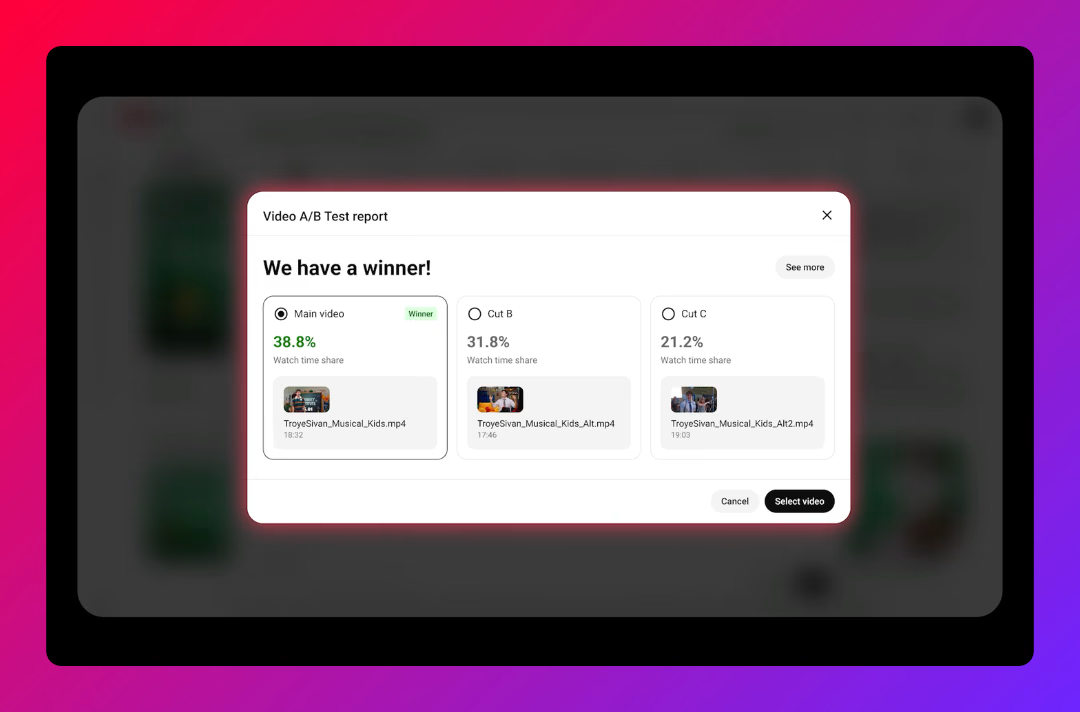
Yes, across more than one independent study. In Sounds Profitable's research, 40% of listeners name YouTube as their most-used podcast platform, compared with 18% for Spotify and 11% for Apple Podcasts. Edison Research's The Podcast Consumer 2026 report puts it a little differently - 37% of weekly consumers, up from 31% two years earlier - but reaches the same conclusion: YouTube has overtaken Spotify as the platform most people actually use most for podcasts. The exact number moves depending on how a study defines "use most," but every recent study points the same direction.
What's more interesting than the ranking is why. It's not primarily an algorithmic recommendation story. 78% of YouTube podcast users say they find shows through intentional search - typing in a title or a host's name - rather than through something YouTube served up to them. That reframes what "optimizing for YouTube" actually means: it's closer to SEO than it is to gaming a feed.
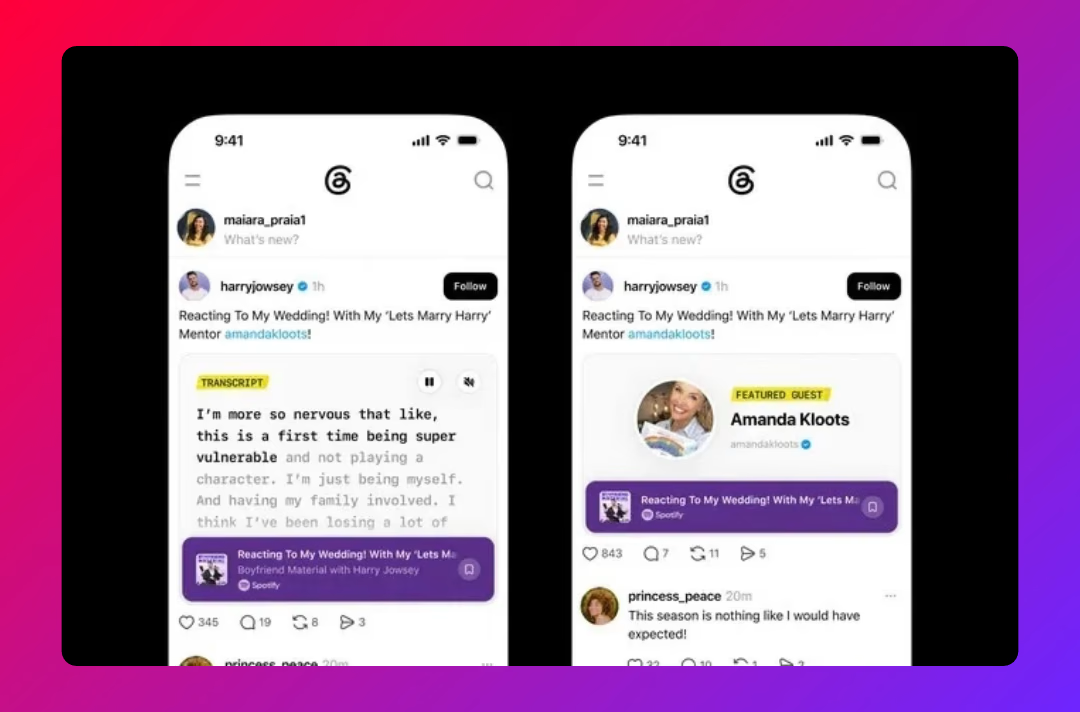
Mostly organic. Among listeners who discovered a podcast through social media, 60% found it through a post from someone they follow, versus 33% through a sponsored post. A clip shared by a real person reads as a recommendation. The same clip running as an ad reads as an ad, and it's working on a colder audience that has no relationship with the show yet. Paid promotion still has a job - extending reach past your existing orbit - but it isn't the default lever to reach for first.
No — it tends to help. Being upfront that a company or brand is behind a podcast reads as a net positive signal to listeners overall, and even more so among 18-34 year-olds, according to Sounds Profitable's discovery research. Listeners aren't put off by knowing who made a show; if anything, a recognizable name adds a bit of trust before the first play. Hiding the affiliation isn't buying you anything.
No, and this is the finding that should change how a show plans its content, not just its launch. Each discovery channel comes with a different audience attached to it:
TikTok skews young.
Discovery on TikTok is nearly 7 times more common among listeners aged 18-34 than among those 55 and older.
Spotify listeners are the most loyal.
Among people who discover a show on Spotify, 61% go on to listen weekly - the most committed segment of any discovery channel measured.
Apple Podcasts skews affluent and audio-first.
Browsing inside Apple Podcasts remains a real discovery path, particularly for news and technology shows, among a higher-income, headphones-in audience.
One clip, reformatted five ways and posted everywhere, isn't a strategy for reaching all three of these audiences at once - it's effort spent reaching whichever one happens to see it.
More than most platforms, honestly. 64% of listeners get podcast recommendations from friends, family, or colleagues, and 72% of the people who get one say they're likely to act on it. That conversion rate beats almost every paid channel available to a podcast. It's also the hardest channel to plan for directly, which is exactly why it gets under-invested - but a show that's genuinely easy to forward (a clear hook, a quotable clip, a clean episode link) is quietly building this channel with every episode, whether or not anyone's tracking it.
Constantly, and this is the part launch-week thinking misses. Around half of listeners say they looked for a new podcast in the past month, and 45% started a new show in the past three months, per Sounds Profitable's research. Discovery isn't a one-time event that happens in a show's first few weeks and then dries up - it's an ongoing habit among the audience you're trying to reach, which means a show's discoverability compounds the longer it keeps showing up, not just in the week it launches.
Not dead, just no longer the center of gravity. Charts and in-app recommendations still exist, and a chart placement can still give a show a short-term visibility bump. But building a launch strategy that depends on climbing a chart is optimizing for how podcasts got found five or six years ago, not how they get found now. Treat charts as a nice bonus if it happens, not the plan.
The channels are broadly consistent, but the mix shifts by genre and audience. A branded B2B show is more likely to see LinkedIn and search do real work alongside YouTube, since its audience is professional rather than entertainment-seeking. A consumer or lifestyle show will lean harder on TikTok and Instagram for the organic-sharing effect. The underlying pattern holds either way: discovery is spread across video, search, and social sharing, not concentrated in a podcast app - but which of those three does the heavy lifting depends on who you're actually trying to reach.
Three things worth acting on if your show's growth has stalled: build for YouTube search first, since that's where the biggest, most intentional audience is actually looking; seed organic sharing from your host, guests, and team before spending on ads, since that's where most real discovery happens; and stop treating discovery as a launch-week problem - the shows still finding new listeners a year in are the ones that never stopped feeding these channels in the first place.
Not sure which of these channels your show is actually winning - or losing - on? Talk to Poddster about a distribution audit and we'll show you exactly where your next listener is most likely to come from.




Join 5.1K podcasters, creators, and brands already producing, editing and growing their video content with the world's #1 podcast studio brand.