Get Started
Get Started


Branded podcasts rarely get cancelled because they were too cheap. They get cancelled because nobody could say what they were for. Here's a simple three-part check to run before you launch.


When a branded podcast gets cancelled, the post-mortem usually blames money. The production budget was too small, the promotion budget never arrived, or the show "needed more time." Sometimes that's true. But far more often, the show was quietly doomed long before anyone looked at the budget, because nobody could clearly say what it was for.
That's the uncomfortable truth behind a lot of corporate podcasts. And the good news is that it's fixable before you record a single episode.
Writing for Sounds Profitable in August 2026, Fatima Zaidi, CEO of podcast agencies Quill and CoHost, framed the problem around one question: what is this show for? Goals like "awareness" and "thought leadership," she argued, survive in planning documents precisely because they're too vague to ever fail.
That matches what the data shows about how brands approach podcasting. In a 2026 survey of 861 marketing and PR professionals by Outcomes Rocket and Health Podcast Library:
In other words, many brands believe their show is working without a clear way to prove it. That's fine until a new CMO or a tight quarter asks for proof. Then a show without a defined purpose has nothing to stand on.
A podcast that can't fail usually can't succeed either. Vague goals feel safe right up until the budget review.
At Poddster, we use a simple check before a corporate show goes into production. If a brand can't answer all three of these clearly, the show isn't ready, however good the concept or the budget.
1. A named audience
Not "professionals" or "our customers," but a specific group of people or accounts the show is built to reach, chosen on purpose. A podcast for procurement leads at mid-sized logistics firms is a show you can design, book guests for, and promote. A podcast for "business leaders" is a show that's competing with every business podcast ever made.
2. A defined change
Ask what will be true because the show exists that wouldn't be true otherwise. Maybe target accounts understand a problem your product solves. Maybe prospects arrive at sales calls already trusting your experts. Maybe new hires ramp up faster. The change should be specific enough that you could check, six months in, whether it's happening.
3. A single accountable owner
Shows owned by "the content team" or "marketing" tend to drift. Someone specific needs the show's outcome as part of their job, with the authority to make decisions about guests, format, and promotion. When a show has one owner, it has an advocate in the room when budgets get discussed.
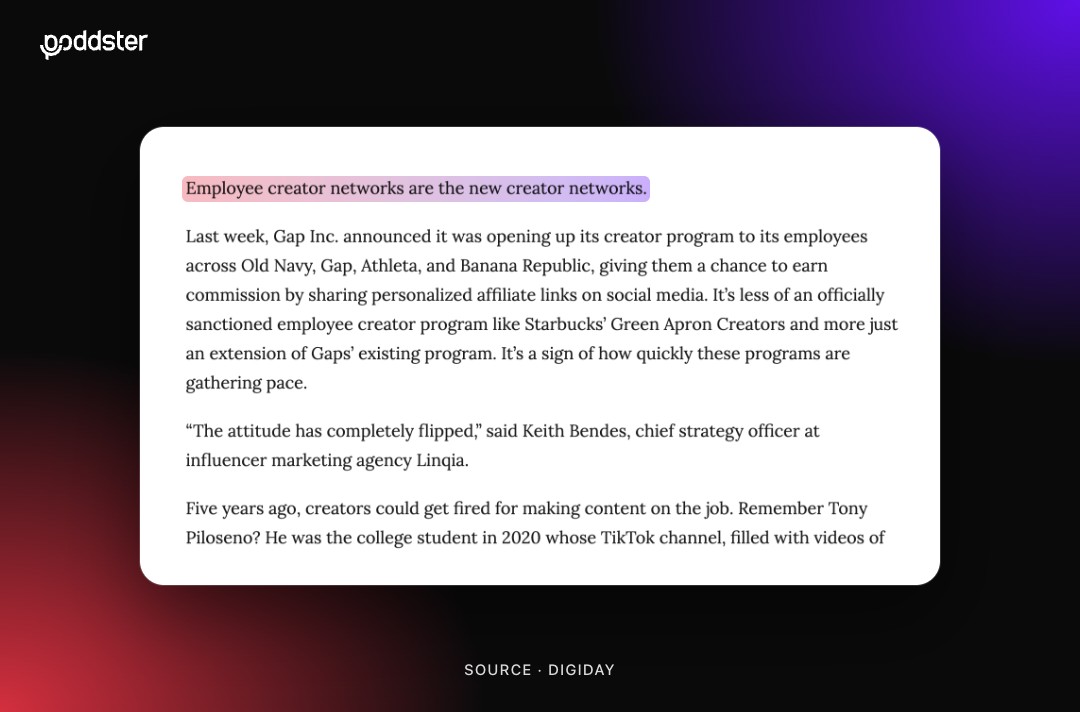
Read more: Brands are turning employees into creators. Most are getting the setup wrong.
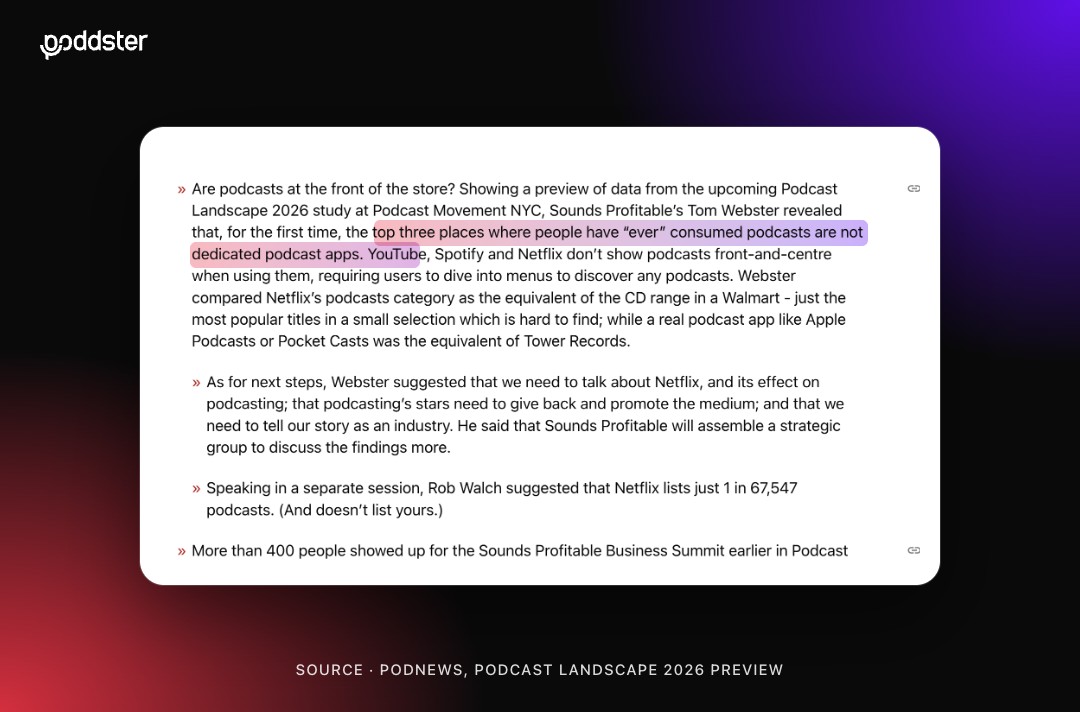
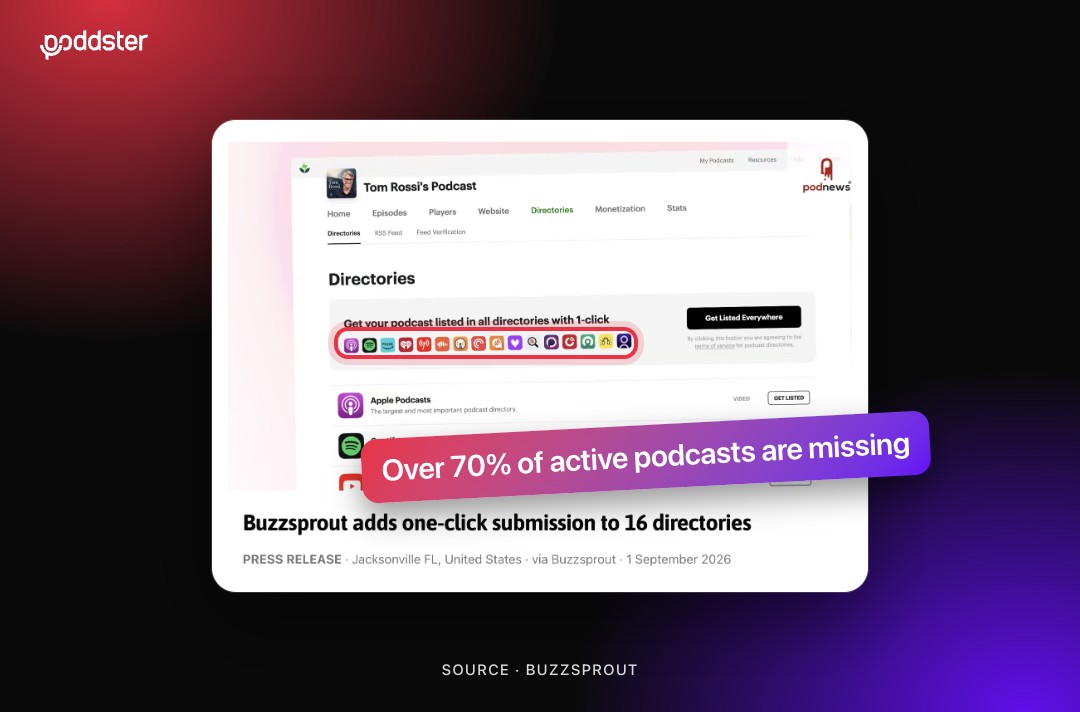
We've written before about how distribution and measurement are what hold most B2B podcasts back, more often than the quality of the content. That's still true. But distribution and measurement both depend on the three answers above. You can't build a distribution plan without knowing who you're trying to reach, and you can't measure success without defining what success is.
Clarity also makes the creative work easier. A show with a named audience and a defined change usually ends up with a sharper angle, better guest choices, and episodes that feel like they're going somewhere.
Podcasting as a whole has a high drop-off rate. Podchaser data shows that of the 153,767 new podcasts launched worldwide in the first half of 2026, 41.7% had already stopped publishing by the end of June. That figure covers all podcasts, not just branded ones, but the lesson carries over: launching is easy, and staying on air is the hard part.
The branded shows that last tend to be the ones that answered the hard questions early. They know who they're for, what they're trying to change, and who's responsible for making it happen. They're willing to be measured against those answers, and that's exactly what protects them when someone asks whether the podcast is worth it.
Whether you're starting a podcast for your business or reviewing one that's already running, try writing these three sentences:
If any of them is hard to write, that's where to focus before you spend any more on production. And if you'd like a second pair of eyes on your answers, book a conversation with Poddster.





Join 5.1K podcasters, creators, and brands already producing, editing and growing their video content with the world's #1 podcast studio brand.