Get Started
Get Started


The ad industry wants one agreed definition of a view, because buyers no longer trust the numbers they're shown. Here is what a podcast should put in front of sponsors now, while the standard is still being worked out.


If you sell sponsorships on a video podcast, the people buying them have a trust problem with your numbers. Not necessarily with you, but with the numbers.
New research from the IAB, the main trade body for digital advertising, puts it plainly. In a survey of 53 creator-economy leaders for its report The Creator Economy's Next Chapter, 67% named measurement as the top problem. Asked which standard they most wanted, the largest group (66%) chose a common definition of a "view".
According to Tubefilter's coverage, brands and talent agencies said they had zero percent confidence in the numbers they receive, even though most of the companies producing those metrics said they were very confident. That gap is where sponsorship deals go wrong.
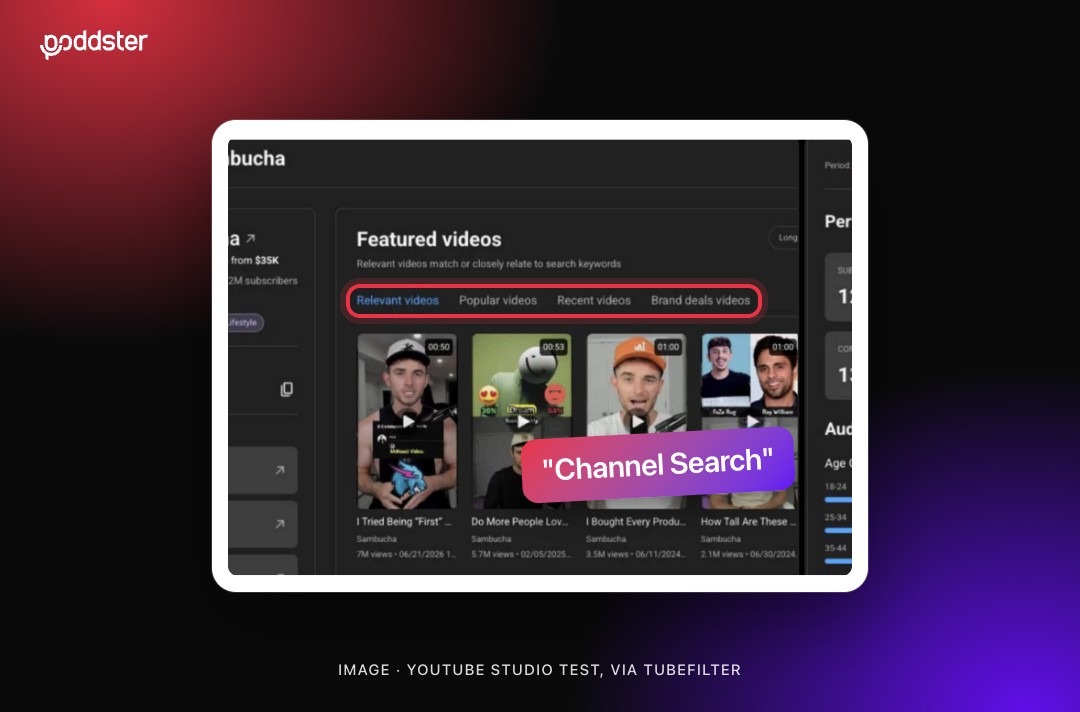
On YouTube, the definition has moved twice this year. In August, YouTube changed how it counts views, so a public view now registers the moment a video starts to play. YouTube said the change would give creators "a clearer picture of their overall exposure". The more meaningful figure, engaged views, is still there, but only the channel owner can see it in YouTube Studio.
Then came co-viewing. YouTube now estimates how many people are watching together on a TV, and its help pages say that from November 2026 public view counts on watch pages include those co-views. As we covered when the metric first appeared, it's an estimate even YouTube can't fully explain.
None of this is dishonest. But a sponsor looking at a public view count can no longer tell how many people actually stayed long enough to hear their ad.
There's good news in the data for podcasters. Mondo Metrics analysed 1,139 YouTube channels and found that long-form public views now run about 1.82 times the old count. Broadcasters saw the biggest jump, at 2.03 times. Podcasts saw the smallest of any category it tracks: 1.61 times, across 211 shows.
That makes sense. People who press play on a long episode tend to stay longer than people flicking past a short clip. It also means podcasters have less to lose from honest reporting than almost anyone else on the platform.
"A first-frame play is worth nothing to a host-read sponsor." Nick Cicero, Mondo Metrics
Read more: Spotify now counts a podcast play after 30 seconds. Here's what each of your numbers really means
Mondo Metrics' conclusion is a useful rule of thumb: the right metric is the one that matches where the ad sits. A logo on screen from the first second can fairly be judged on public views. A host-read ad 20 minutes into an episode can't. Here's what we'd put in a podcast media kit or campaign report.
1. Engaged views for each episode
Pull them from YouTube Studio and present them as the main video number for host-read ads. They're smaller than public views, and that's the point. A sponsor who sees you leading with the honest number is more likely to trust everything else you show them.
2. Retention at the ad spot
The audience retention graph in YouTube Studio shows how much of the audience was still watching at any moment. Note the timestamp of the sponsor read and report the share of viewers still there. That's the closest thing to "how many people heard the ad".
3. Audio plays alongside video
Many listeners never touch YouTube. Add audio downloads or plays from your host and from Spotify and Apple Podcasts, and say how each one is counted. Every platform has its own rules, and Apple Podcasts numbers can look smaller for reasons that have nothing to do with your audience.
4. A definition and date range next to every number
"12,400 engaged views, YouTube Studio, first 30 days" is a number a buyer can use. "12K views" isn't. Don't compare figures from before and after a platform changed its counting without saying so.
5. The metric agreed in writing, before the campaign
Decide with the sponsor which number the deal will be judged on, over what period and from which source. Most measurement arguments start because nobody agreed this at the beginning.
The IAB says it will work with the Media Rating Council and other industry bodies to establish common definitions for views, impressions, reach and watch time. Tubefilter reports it hopes to secure one to two platform agreements in the first year. That's a start, but it won't fix the numbers in next month's campaign report.
Until a shared standard exists, clear and honest reporting is a selling point in its own right. It's also one of the simplest ways to make podcast sponsorship easier to buy, renew and grow.
Want help building a media kit or sponsor report for your show? Talk to the Poddster team.







Join 5.1K podcasters, creators, and brands already producing, editing and growing their video content with the world's #1 podcast studio brand.