Get Started
Get Started


Podcast ad spend is still growing, but not every sponsorship pays off. Here's what the 2026 data says about when podcast ads work, when they don't, and how to buy them well.

Every few months, someone in a marketing meeting asks the same question: is podcast sponsorship actually worth the money, or is it just a nice-to-have for brands that already have budget to burn? It's a fair question. Podcast ads aren't cheap, the numbers can be hard to read, and the medium has changed a lot since the days of a single mattress ad read over and over on every show.
The short answer in 2026 is yes, podcast sponsorship can be one of the most efficient ad buys available. The longer answer is that it depends on how you buy it. The data now shows pretty clearly which sponsorships pay off and which quietly waste money.
Brands aren't treating podcasts as an experiment any more. According to the IAB and PwC's Internet Advertising Revenue Report, US podcast ad revenue grew 17.6% to $2.9 billion in 2025. That's faster than digital audio overall, which grew 10.2% to $8.4 billion.
The growth is expected to continue. The IAB's September 2026 update to its Outlook Study projects US podcast ad spend will rise another 8.7% this year. Globally, WARC Media forecasts online audio ad revenue will grow 9.9% to $16.6 billion in 2026, and a further 7.5% in 2027.
Growth on its own doesn't prove anything works, of course. Plenty of ad formats have grown on hype. What makes podcasts different is what happens after the ad plays.
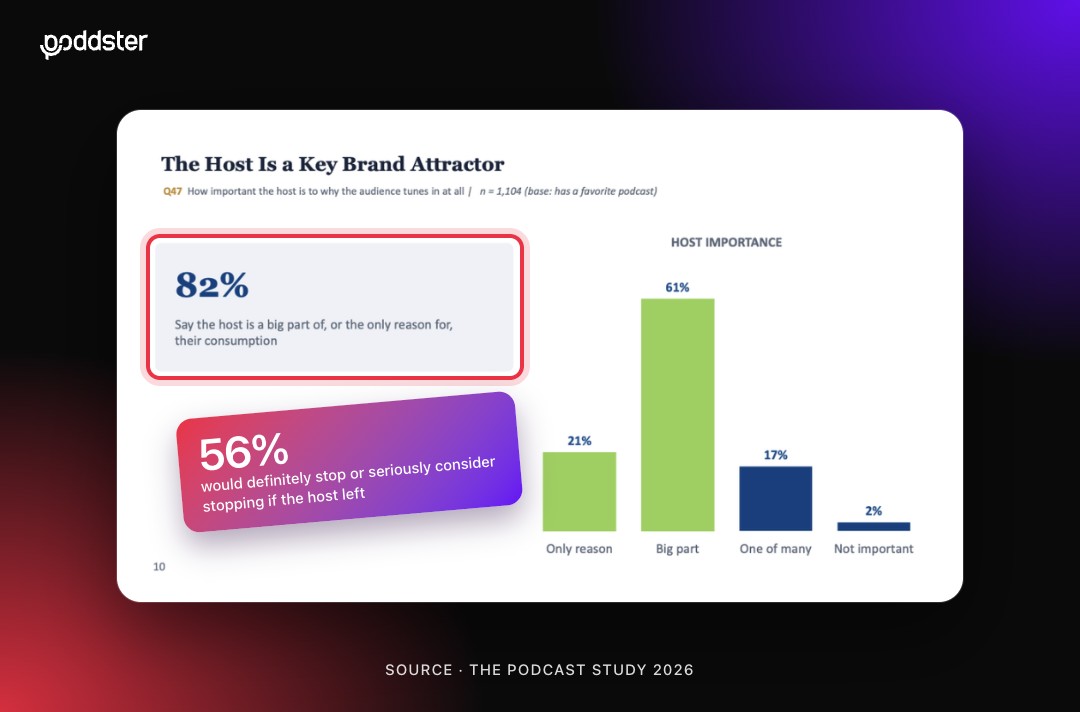
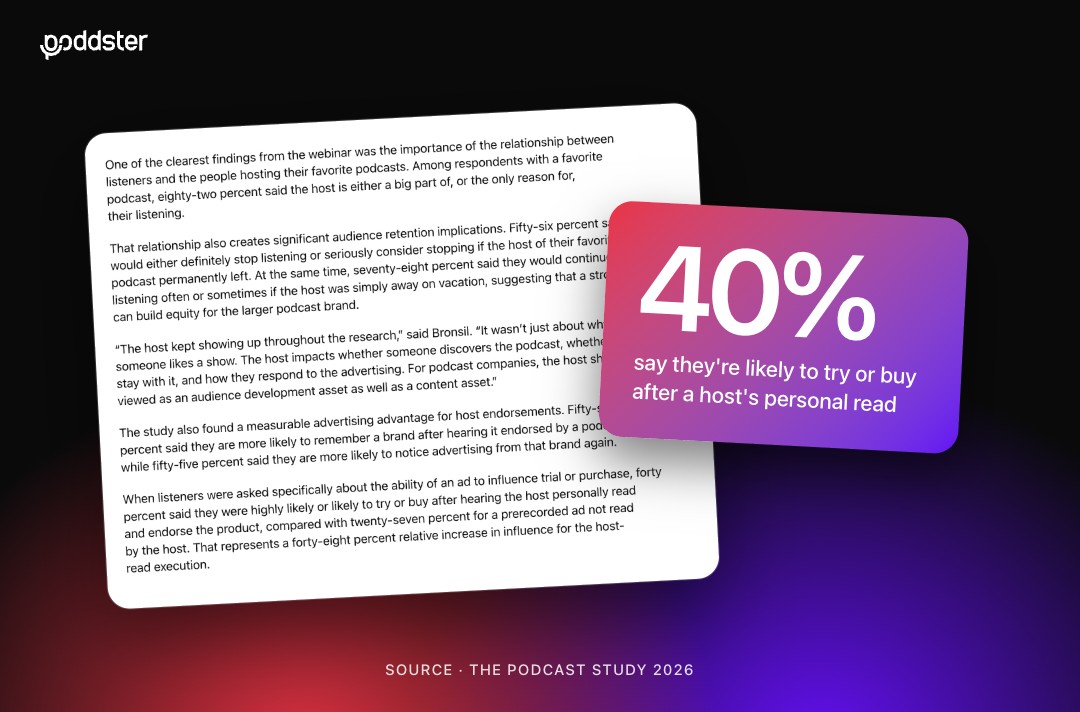
The core of podcast advertising is trust. People choose to spend long stretches of time with a host's voice, often week after week, and that relationship carries over to the brands the host talks about. That's something you can see in what we know about podcast listeners more broadly: they're loyal, attentive, and harder to reach anywhere else.
The Podcast Study 2026, a survey of 1,205 US podcast consumers by Strategic Solutions Research and Point-To-Point Marketing, put numbers on it:
Attention backs that up. Sounds Profitable's 2025 study of more than 5,000 US adults found podcast ads had the highest ad recall of any platform among daily users, at 86%.
A podcast ad isn't bought on reach. It's bought on the relationship between a host and the people who choose to listen to them.
This is where a lot of sponsorship budgets go wrong. The instinct is to chase the biggest show you can afford. The data says that's often the expensive way to buy podcast ads.
1. Mid-sized shows can outperform celebrity podcasts
Podscribe data cited in Audacy's State of Audio report found advertisers on mid-sized shows saw a 22% lower cost per acquisition than those on the largest celebrity-led podcasts. A tightly focused show with a loyal audience often moves more product than a famous name with a broad, casual one.
2. Ad load matters more than most buyers realise
Podscribe's Q2 2026 Performance Benchmark, which covers more than 98,000 campaigns, found that purchase rates drop as shows add more ads. Shows with roughly a 2% ad load converted at about 0.036% per impression. At 8% that fell to 0.022%, and at 15% or more it fell to 0.017%, less than half the lightest rate.
Listeners notice, too. In The Podcast Study 2026, 54.8% of listeners said podcasts already carry too many ads, and only 8.6% said they would tolerate more ads to keep shows free.
3. Direct show buys cost more but convert better
The same Podscribe benchmark put average cost per acquisition at $64 for programmatic buys, $74 for direct run-of-network buys, and $98 for direct buys on specific shows. Direct show buys were the priciest, but they also had the highest purchase rate. You're paying for fit, and fit tends to pay you back.
Read more: Why distribution and measurement (not content quality) are killing most B2B podcasts
Podcast ads aren't automatically a good idea. In our experience, sponsorship tends to disappoint when one of these is true:
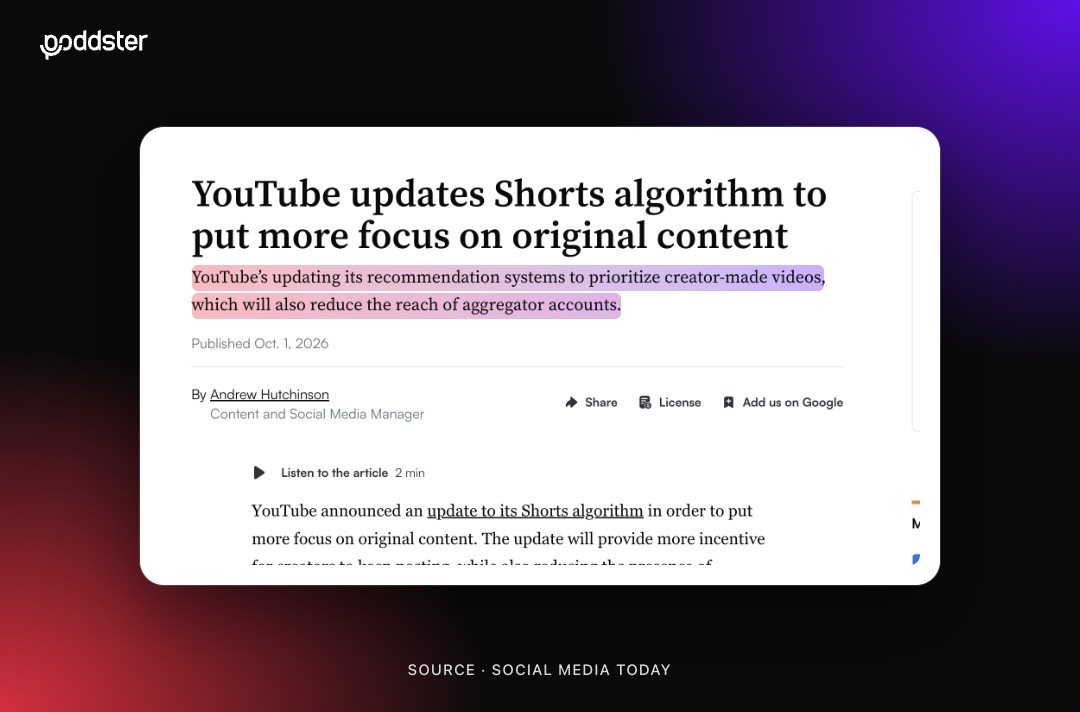
Measurement got more complicated in 2026. Since June, Spotify only counts a podcast "play" after at least 30 seconds of listening or watching. YouTube went the other way: from August 24, its public view count starts from the very first frame of a video, which made YouTube's public view counts look much bigger overnight without any change in real audience.
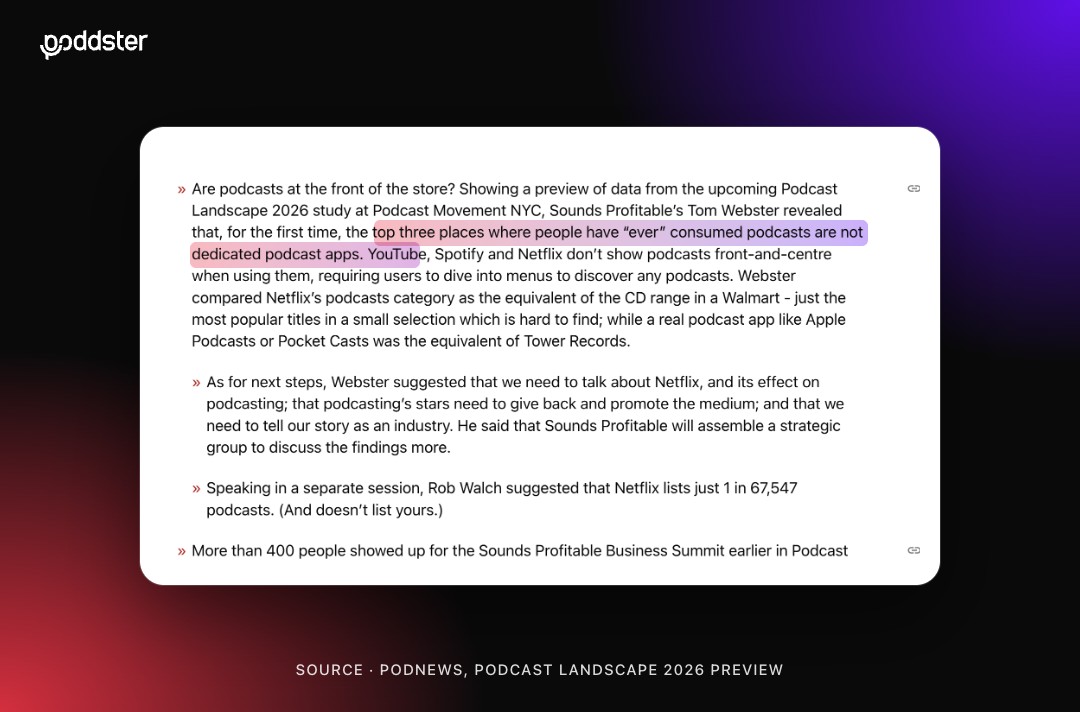
That's why several of the biggest podcast ad agencies now buy YouTube podcast inventory only on "engaged views," the stricter count that creators can see in YouTube Analytics. If a show pitches you its YouTube numbers, ask which view count it's quoting. If you're buying across platforms, make sure every proposal uses the same definitions.
For most brands, podcast sponsorship is worth testing in 2026, with conditions. Buy for audience fit rather than size. Ask for host-read ads. Favour shows with lighter ad loads. Set up a measurement plan before the first ad runs, whether that's a promo code, a dedicated landing page, or pixel-based attribution. And treat the first campaign as a test, not a verdict.
Sponsorship is also only one way into podcasting. Some brands get more out of running their own show, where they own the audience and the relationship instead of renting someone else's. If you're weighing up which route makes sense for you, talk to the Poddster team and we'll help you work it out.





Join 5.1K podcasters, creators, and brands already producing, editing and growing their video content with the world's #1 podcast studio brand.