Get Started
Get Started


Podcast Movement 2026 put podcast SEO and AI search firmly on the agenda. Here are the tactics worth using, plus the one piece of advice the latest citation data has already overtaken.


Podcast SEO used to be an afterthought: write a decent title, paste in some show notes, hope for the best. That's no longer good enough. Listeners now find shows through Google, YouTube, and AI assistants as much as through podcast apps, and each of those rewards slightly different things.
At Podcast Movement 2026 in New York, one session focused squarely on this problem: how to get every episode ranking in Google and showing up in AI answers. Here's what was recommended, what holds up, and what's already changed since.
The Podglomerate's recap of the conference highlighted a session led by Bruce Chamoff, founder of World Podcast Network. His recommendations, in short:
These are sensible, low-cost habits. The seven-word figure is a guideline rather than a hard rule (Google trims titles by pixel width, not word count), but the principle is right: put the most important words first and make the title clear on its own.
The same recap described Reddit as the single most-cited website across both AI and Google search results. That was a common view a year ago. The latest data says it's no longer accurate.
Ahrefs' study of more than 3 million US queries, updated in September 2026, found YouTube was the most-cited domain in Google's AI Overviews at 22.9% of citations, ahead of Reddit at 18.5%. And in August 2026, Reddit's share of citations in ChatGPT dropped sharply. Tracking firm Promptwatch measured a fall of around 86%, and Petra Labs around 81%, with citations shifting towards brands' own websites and review sites. OpenAI has said Reddit continues to be cited.
Reddit is still one of the most-cited sources overall, and it's still worth taking part in genuine conversations there. But it isn't a guaranteed route into AI answers, and its position can change quickly.
For podcasters, the most interesting part of the citation data isn't Reddit. It's that YouTube now tops Google's AI Overviews.
Read more: Is your podcast missing from directories you don't even know exist?
Putting the conference advice together with the latest data, here's the checklist we recommend for every episode.
1. Publish full video episodes on YouTube
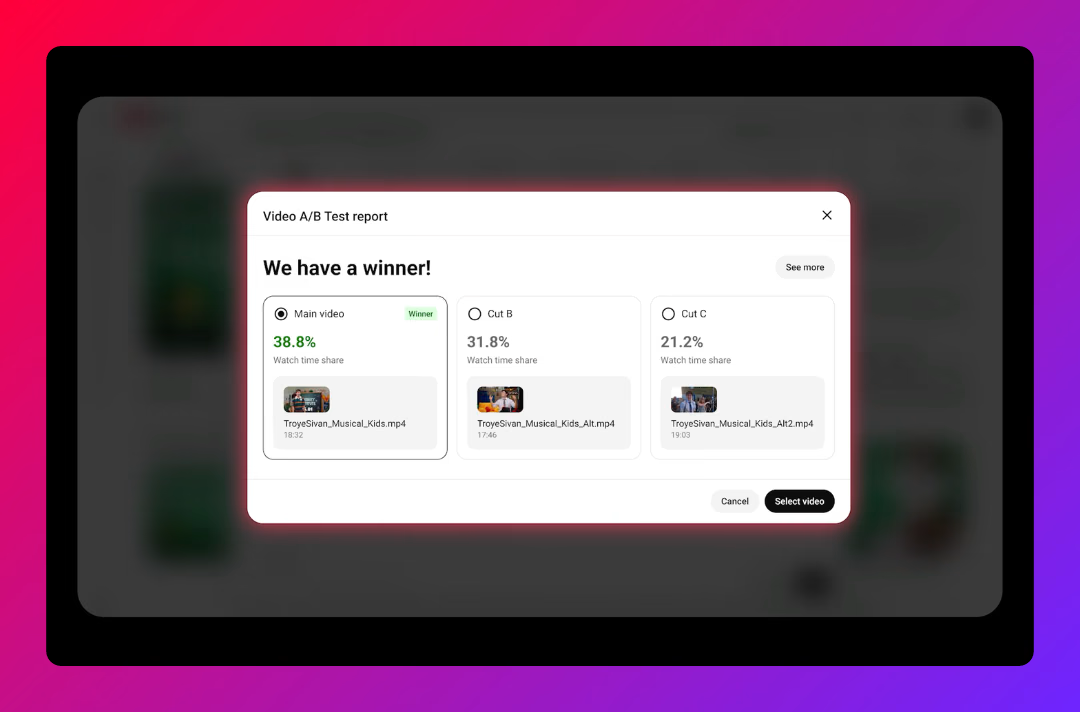
If YouTube is the most-cited source in AI Overviews, a well-described video episode on YouTube is one of your best chances of being surfaced. It also helps you show up in YouTube's own search and recommendations. We covered how YouTube recommends podcasts after this year's Made on YouTube event.
2. Add chapters and timestamps
Google's documentation confirms it can show "key moments" for YouTube videos based on timestamps in the description. Clear, descriptive chapter titles give search engines specific moments to point people to, which is ideal for long conversations.
3. Write titles that say exactly what the episode answers
Lead with the topic and the question, not the guest's name or a clever pun. "How to price a B2B consulting offer" will be found. "Episode 47 with Sarah" won't.
4. Publish a transcript and real show notes
A transcript gives search engines and AI tools the full text of what was said. Show notes should summarise the key points in plain language, with links to related episodes.
5. Answer the questions your audience actually asks
Look at the questions prospects ask your sales team, the comments under your videos, and the searches that already bring people to your site. Then make episodes that answer them directly. We've written about why the questions your buyers are asking AI assistants should shape your episode list.
Search is only one way people find a show. Recommendations, clips, word of mouth, and social all play a role, and they work together. If you want the bigger picture on podcast discovery, it's worth reading alongside this checklist. But search is the part you can improve systematically, episode by episode, and the gains add up over time as your archive grows.
If you'd like help making every episode easier to find, from titles and chapters to transcripts and YouTube publishing, get in touch with the Poddster team.







Join 5.1K podcasters, creators, and brands already producing, editing and growing their video content with the world's #1 podcast studio brand.