Get Started
Get Started


Podcast discovery has moved out of podcast apps and into YouTube, social clips, and AI assistants. Here's what that shift means for how your branded podcast needs to show up in 2026.

Most branded podcasts don't fail because the content is bad. They fail because nobody built a real plan for how anyone was supposed to find the show in the first place.
That's not a guess. About 391,000 podcasts are currently active - roughly 11% of every podcast that's ever launched, according to podcast search engine Listen Notes' most recent count. The other 89% mostly didn't get cancelled dramatically. They just quietly stopped, usually somewhere around episode eight, once whoever was posting it to LinkedIn ran out of steam.
If your distribution plan still starts and ends with submitting your RSS feed to Apple and Spotify, you're already behind. Research from Sounds Profitable's 2026 Podcast Discovery Playbook found that 40% of listeners discovered their favorite podcast on YouTube - more than double any other single source - and that YouTube plus social platforms together account for 61% of how people find the show they now listen to regularly.
Word of mouth still outperforms almost everything: 64% of listeners say they get podcast recommendations from people they know, and 72% say they actually act on those recommendations. Among listeners who found a show through social media specifically, 60% found it through an organic post from someone they follow, compared with just 33% through a sponsored post.
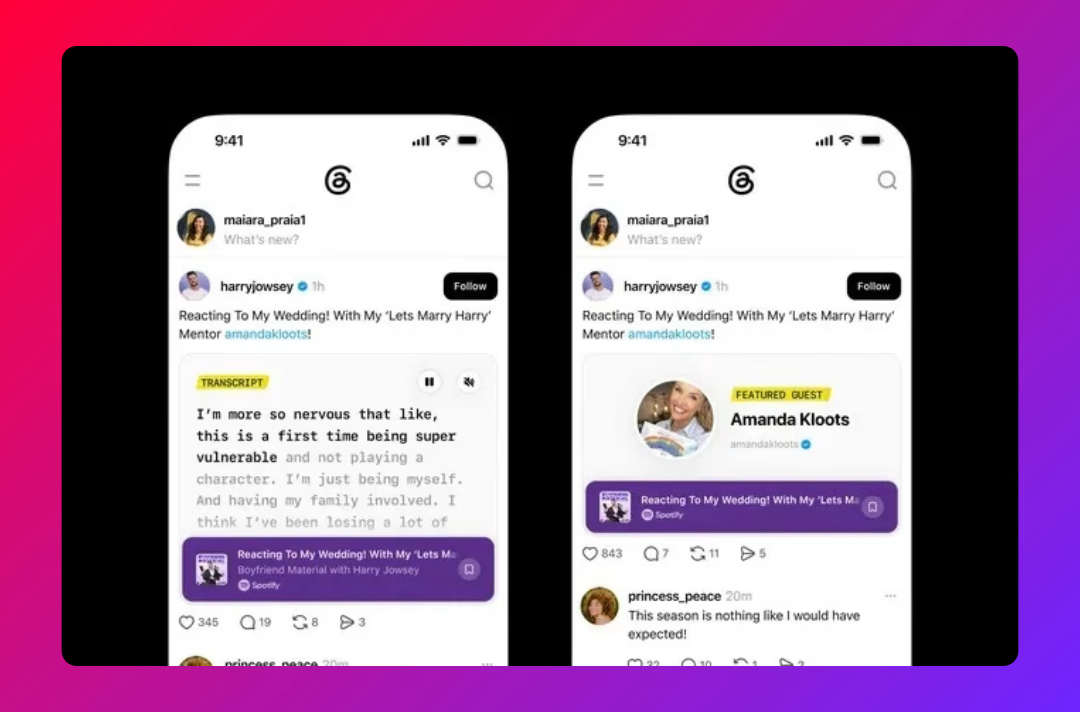
Clips are doing most of the heavy lifting behind those numbers. Sounds Profitable's Podcast Atlas research found that 89% of listeners watch podcast clips on social media at least occasionally, and 84% say a clip has led them to become a regular listener of a show. If you're not filming and cutting your episodes into short, specific clips, you're opting out of the channel doing the most discovery work in the industry right now.
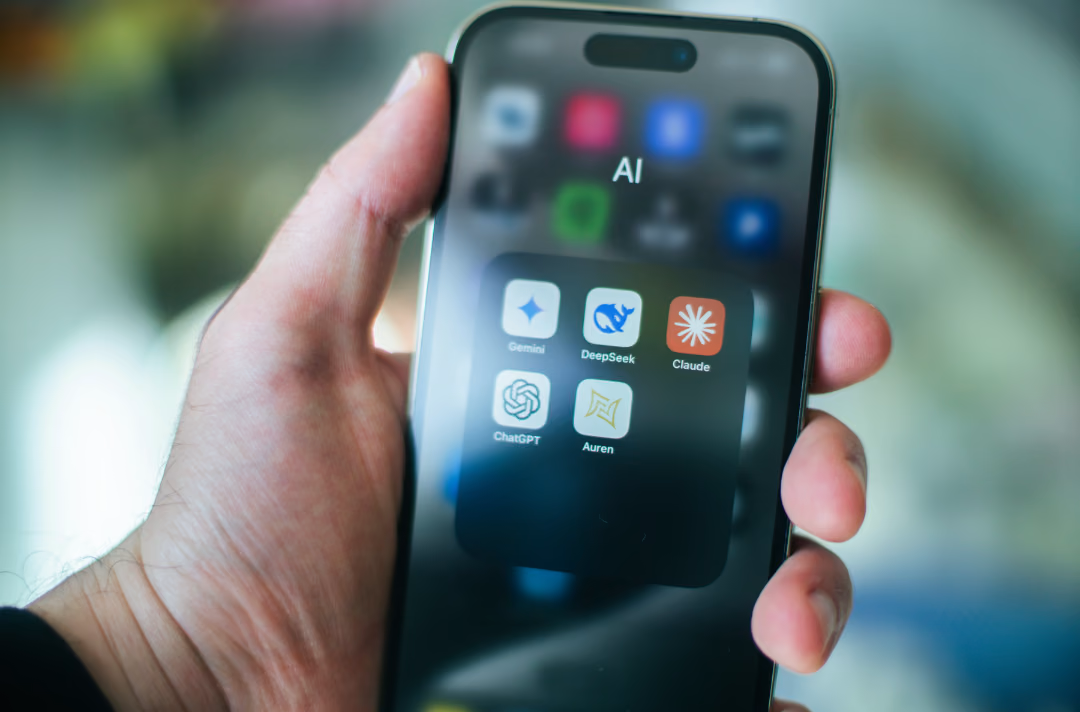
The other shift is quieter but just as significant. Edison Research's Infinite Dial 2026 found that 57% of Americans aged 12 and older have now used a generative AI assistant. That group also consumes noticeably more audio than people who haven't: 87% of AI-assistant users listened to online audio in the past week, compared with 61% of non-users. Put plainly, the people most likely to ask ChatGPT or a similar tool a question are also the people most likely to already be listening to podcasts.
Transcripts alone won't differentiate you anymore. Apple, Spotify, and YouTube all auto-generate them now, so simply having one is table stakes rather than an edge. What still separates shows is the structured written content built around each episode: a real episode page with the player, a genuine transcript, and show notes that name the actual resources discussed - plus a blog recap built around a keyword your buyer would search, organized under headers phrased as the real question someone would ask.
That last part matters more than it sounds. Both AI assistants and traditional search snippets tend to pull clean, direct answers to specific questions. A section headed "How much does a branded podcast cost to produce?" does double duty: it ranks, and it's the kind of passage a chatbot is likely to quote back to whoever asked.
None of this requires a bigger budget than most brands already have. It requires deciding, before the first episode goes live, exactly who the show is for and exactly how those people are going to find it - because right now, most of them are being asked by an AI assistant to answer questions your show could already be answering for them.
If you're planning a branded podcast and want a distribution plan built in from episode one rather than bolted on in month six, that's exactly the kind of groundwork Poddster builds into every production from day one - get in touch and we'll walk you through what that looks like for your show.






Join 5.1K podcasters, creators, and brands already producing, editing and growing their video content with the world's #1 podcast studio brand.