Get Started
Get Started


YouTube is testing invite-only bonuses for creators who publish Shorts on a steady schedule. Here is what the program actually says, and what it means for your podcast clip plan.

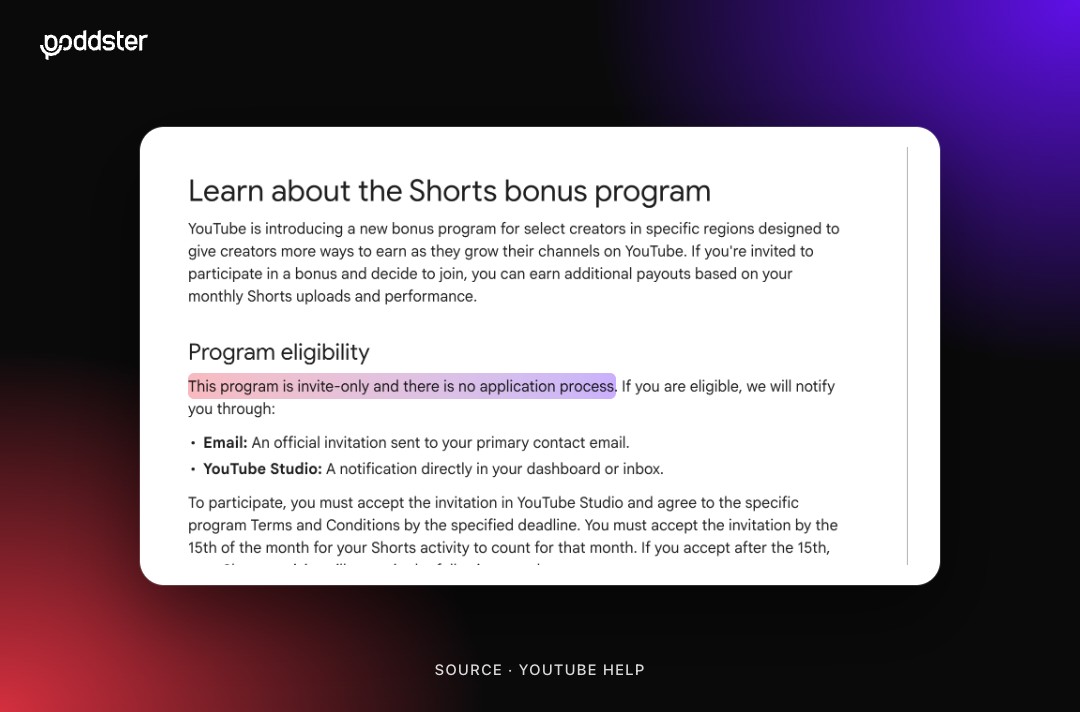
Most podcast channels treat Shorts as an afterthought: a few clips when someone has time, then silence for weeks. YouTube is now testing a program that pays creators to stay consistent.
It is small, invite-only and light on published details. But it shows where the platform's incentives are heading, and it is a good moment to ask what a sustainable clip schedule looks like for your show.
According to YouTube's own program page, the bonus works like this:
YouTube has not published payout amounts or said how long the test will run. It has said it plans more creator bonus opportunities in additional countries over the coming months, and it can change or end the program, generally with 30 days' notice.
The same week, X launched a similar test. Its Video Kickstart Bonus promises up to $3,000 for posting 15 vertical videos on 15 different days in a month. Both programs were reported by The Publish Press, which also noted they remain invite-only.
The early signals are modest. One F1 creator accepted into the YouTube program told The Publish Press that the bonus would not change his mix of short and long content, but would improve the value of something that will always be part of his brand. He estimated his Shorts had earned only around $1,500 in ad revenue this year, and that the bonus could pay $100 to $1,000 a month for uploading 12 videos.
That is a meaningful top-up for a clip-heavy channel. It is not a business model. Short-form earnings still sit well below what long-form ad revenue typically pays.
Read more: What TikTok says it rewards, and how to cut podcast clips for it.
The program page asks for public Shorts. A clip cut from your episode and published as a Short fits that description. What matters is whether your channel gets an invitation, since eligibility is decided by YouTube.
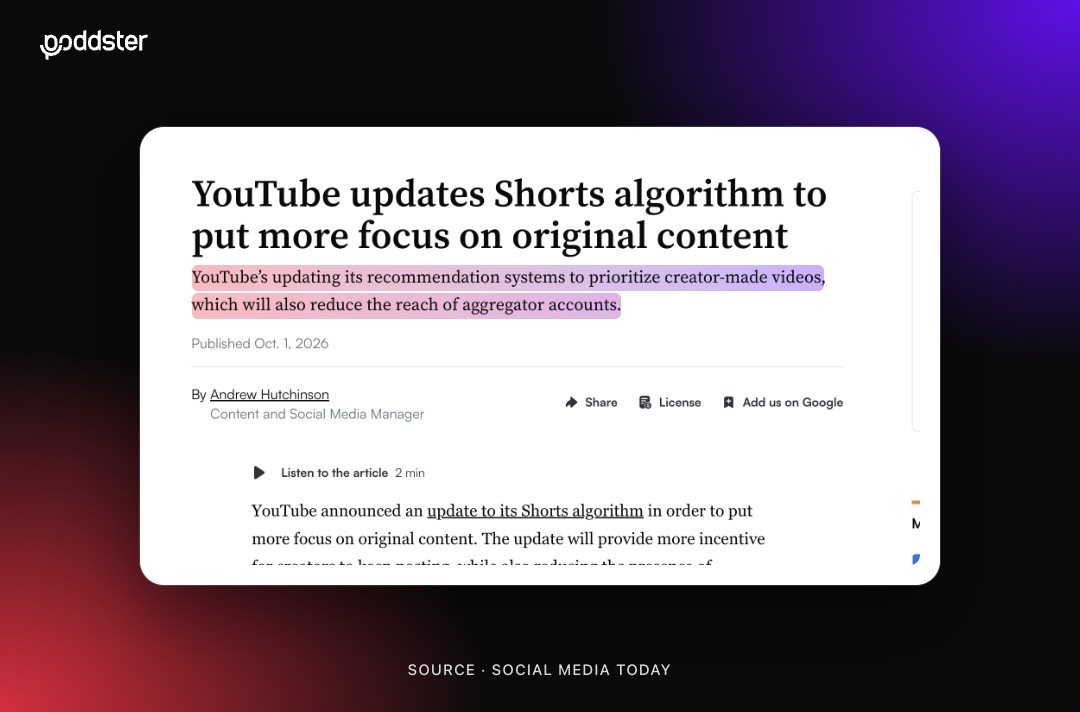
The trap is in the quota. A monthly minimum rewards showing up on schedule, which is good for habit and bad if it pushes you to publish filler. Recent platform changes already point the other way. YouTube has started demoting channels that mostly re-upload other people's clips, so quantity for its own sake is a risky bet.
1. Work backwards from your real capacity. If you record one episode a week, pick a clip count you can cut from it without scraping the bottom. Two or three strong moments beat seven weak ones.
2. Batch the work. Pick clip moments while you edit the episode, write the titles at the same time, and schedule the whole week in one sitting.
3. Cut for a viewer who has never heard your show. Each clip needs a clear hook in the first seconds and a point that makes sense without context.
4. Point every clip somewhere. Mention the full episode, add the link where you can, and make sure your channel page makes the next step obvious.
5. Measure what the clip does. Raw views can mislead, especially since YouTube changed how it counts views. The program itself rewards engaged views, so look at engagement and at whether clip viewers move on to your full episodes. As we have argued before, clips work best as a discovery engine, not a standalone metric.
A bonus for consistency is a nudge to build a habit, and habits are what clip strategies usually lack. But treat any payout as a bonus, not a plan. Build a clip rhythm you could keep even if the program disappeared, and use the bonus, if you get it, as a reason to keep going.
Need a clip workflow that fits your episode schedule? Talk to the Poddster team and we will help you set it up.







Join 5.1K podcasters, creators, and brands already producing, editing and growing their video content with the world's #1 podcast studio brand.