

Get Started
Get Started


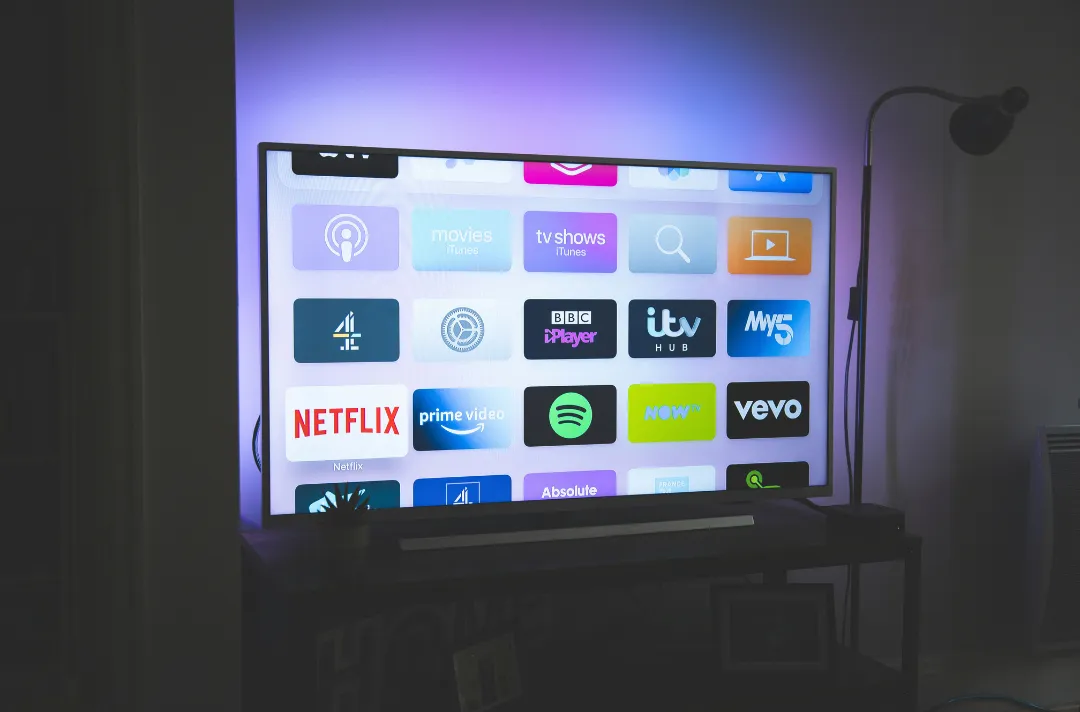
For years, the voice-assistant smart speaker looked like podcasting's next default device: ask it to play a show, and it plays. That future never really arrived. Sounds Profitable's Podcast Landscape 2026 study, based on roughly 5,000 US adults who consume podcasts, shows smart speakers stuck near the bottom of the device rankings while a different screen quietly climbs past them.
Smartphones remain the dominant device by a wide margin, holding steady around 57 to 59% across 2024, 2025, and 2026. Desktop and notebook usage has been gently declining, from 16% down to 13%. Tablets have stayed flat at 9%.
Smart TV is the outlier. It rose from 8% in 2024 to 9% in 2025 to 12% in 2026, making it, in Sounds Profitable partner Tom Webster's words, the only device in the study to have gained ground as a most-used device over the past three years. Smart speakers went the other way, dropping from 2% to 1%, essentially disappearing from the top of consumers' device preferences. Looking at first and second most-used device combined sharpens the picture further: smart TV is now cited by 25% of podcast consumers, up from 22% the year before.
The smart speaker pitch made sense on paper: hands-free, voice-summoned, always in the room. But podcasting is a format people mostly consume while doing something else, commuting, working out, doing chores, and a speaker fixed to one room in the house doesn't travel with a listener the way a phone does. It also never solved discovery well; asking a speaker to "play my podcast" works fine for a show you already listen to, but browsing something new by voice is clunky in a way that scrolling an app isn't.
Smart TVs solve a different problem entirely: they're where households already watch things together, on the biggest screen in the room, often through the very apps, YouTube chief among them, that increasingly host podcast video.
1. A living-room screen is now a real distribution target
If a meaningful and growing slice of your audience is watching on a TV rather than listening on a phone, an episode needs to hold up as a piece of video content on a large shared screen, not just as audio with a static thumbnail.
2. Design for a different viewing context
A TV viewer is more likely watching with others, from across the room, without easy access to skip buttons or captions on demand. Clear visuals, readable on-screen text, and a pace that works without a phone-close view all matter more here than they do for audio-only listeners.
3. Don't write off audio-first formats, but don't ignore this either
Smartphones still carry the large majority of podcast consumption, so this isn't a signal to abandon audio-first thinking. It's a signal that the TV is no longer a negligible edge case worth ignoring, the way a device sitting at 1% clearly is.
The device story in podcasting for the last few years has mostly been about YouTube and video. This data adds a specific, useful detail to that story: it's not just that video is growing, it's that the living-room screen, not the countertop speaker, is where that growth is actually landing.
Want help figuring out whether your show's video strategy actually works on a TV screen, not just a phone? Get in touch with Poddster.


