

Get Started
Get Started


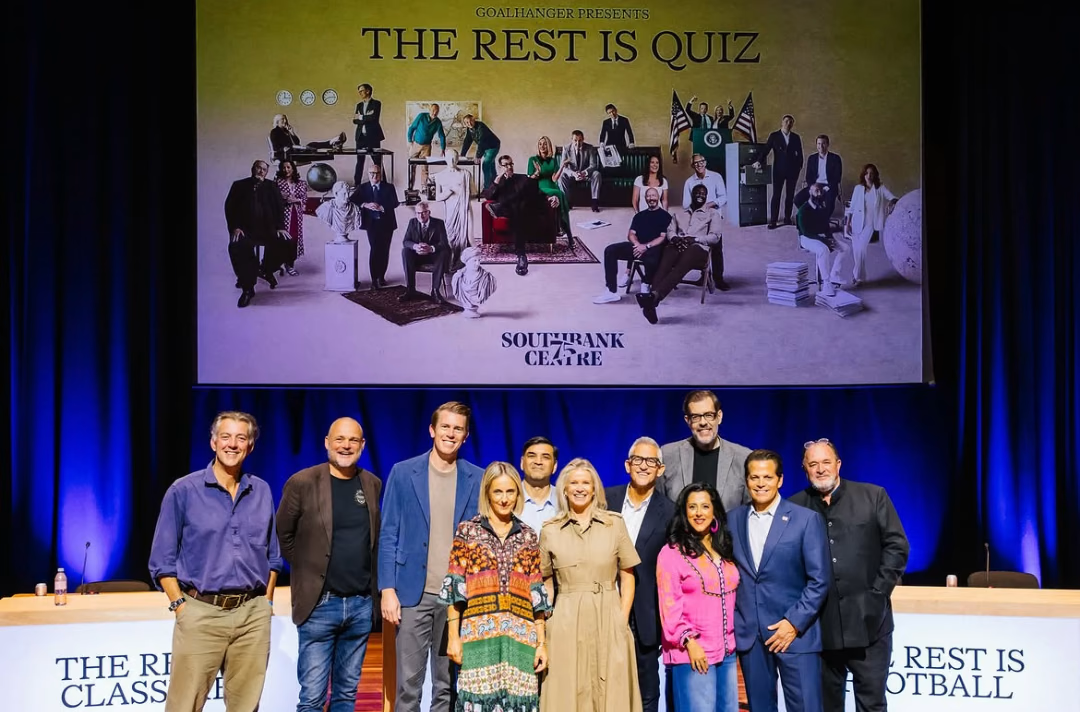
Two events a week apart made the same point from different angles. Goalhanger's first-ever live festival sold out an entire London arts complex, and New York spent a full week hosting back to back podcast industry gatherings. Podcast fandom, it turns out, is willing to show up in person and pay for the privilege.
Goalhanger, the network behind shows like The Rest Is History and The Rest Is Politics, staged The Rest Is Fest at London's Southbank Centre over the first weekend of September, taking over the Royal Festival Hall, Queen Elizabeth Hall, and Purcell Room for 22 shows spanning politics, history, football, entertainment, and more. The festival sold 26,000 tickets, with guests including Stanley Tucci and Mary Beard appearing alongside the network's regular hosts.
The following week, New York hosted what the industry is calling Podcast Week: the IAB's Podcast Upfront, the Sounds Profitable Business Summit bringing together revenue-side executives and buyers, and Podcast Movement's flagship conference, all within days of each other at venues across the city.
It's easy to read festival ticket sales and industry conferences as two unrelated stories: one is about fans, the other is about the business side of podcasting. Read together, they tell a more useful story about where the medium is right now. A show with a genuine fanbase can now reasonably expect that fanbase to travel and pay for a live version of what they already listen to for free, at a scale that would have been hard to imagine for podcasting a few years ago.
That's a meaningfully different growth lever than the usual conversation about downloads, YouTube views, or ad rates. It's audience monetization and audience deepening in the same motion: a live show doesn't just generate ticket revenue, it turns a parasocial listening relationship into an actual shared room, which tends to build the kind of loyalty that outlasts any single platform's algorithm changes.
This applies to branded and corporate podcasts too, not just fan-driven independent networks. A brand running a podcast for its customers or community can use a smaller-scale live event, a panel, a recording in front of a real audience, a listener meetup tied to a launch, the same way: as a chance to turn people who already listen into people who feel genuinely connected to the brand behind the show. The economics look different from a ticketed festival, but the underlying mechanism, giving real fans a reason to show up in person, works at any scale.
1. Live events work best as a deepening tool, not a discovery tool
A live show is not how most people are going to find your podcast for the first time. It's how the people who already love it get a reason to become more invested. Think of it as a retention and community tool first.
2. Scale doesn't need to match Goalhanger's to be worth trying
A network the size of Goalhanger can fill a 2,700-seat hall. A single independent or branded show with a genuinely engaged niche audience can still fill a much smaller venue, and the underlying logic, that real fans will pay to be in the room, holds at any size.
3. A live event needs a reason to exist beyond "we recorded on stage"
The shows that succeed at this tend to build something the audience can't get from a normal episode: a live Q&A, a guest who wouldn't otherwise appear, a format twist specific to being in the room. A live taping that's identical to a normal episode just has a smaller reach than the podcast feed already does.
If your show has an audience that would show up for something in person, that's worth taking seriously as a growth channel, not just a nice-to-have once a show is already big. Talk to Poddster about what a live event could look like for your show.


