Get Started
Get Started


A new French study shows how freely people move between audio and video apps. Here is what that means for how you package, publish and link your podcast, wherever your listeners are.

Podcasters still talk about "our Spotify audience" and "our YouTube audience" as if they were different people. A new study suggests that is often the same person, an hour apart.
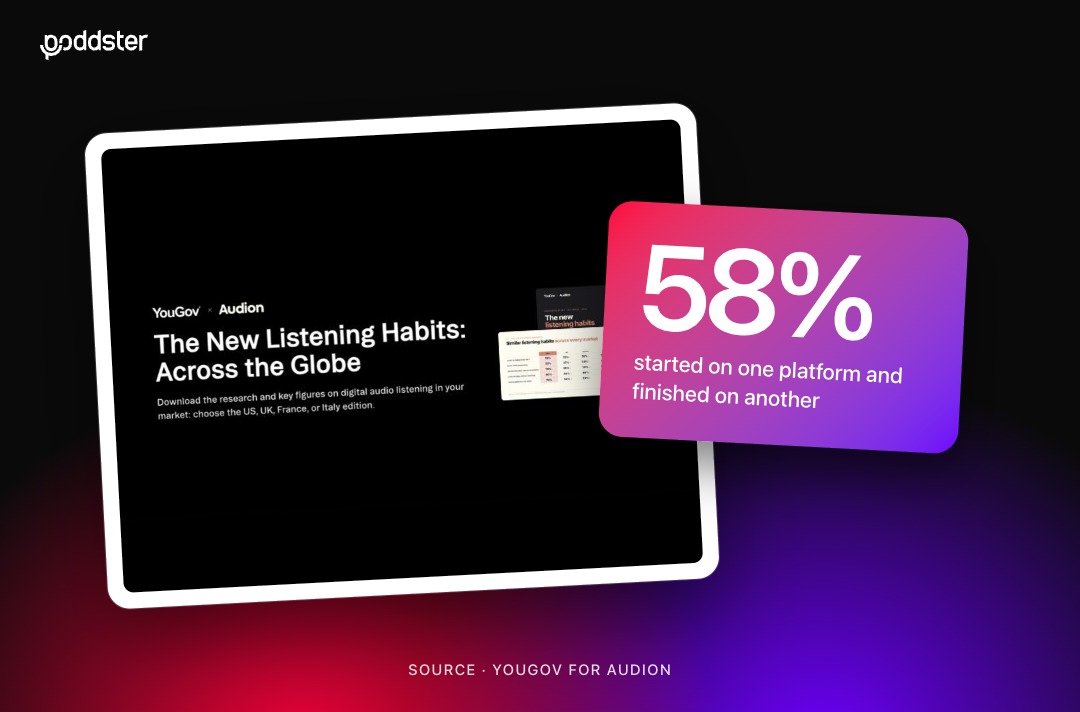
Audion and YouGov surveyed 1,000 French adults in September. 58% of listeners said they had started content on one platform and finished it on another. Podnews calls this "liquid content", and the phrase fits: your episode moves with the listener, from app to app and from screen to no screen.
This is France, so don't treat it as a global number. But the same research ran in the US, Italy and the UK, and some of the patterns repeat.
Among digital audio listeners in France:
Outside France, 66% of US respondents and 64% of Italians said they also use video platforms to listen without watching. Digital audio reach was high too: 79% of American adults, 74% of Italians and 72% of Britons had listened in the past month.
Listening is no longer defined by a device or a platform, but by a moment and an intention.
That line, from YouGov's Julien Chevignon (translated from French), is the real takeaway. Podnews adds that the morning commute is the peak listening time in France, which is a good reminder that context often picks the app.
None of this will surprise anyone following the shift away from podcast apps. What's new is the evidence that people aren't simply replacing one platform with another. They're using several for the same content.
Read more: How podcast discovery really works in 2026
If one person can start your episode on a TV and finish it in their car, a few habits start to look like problems. Separate titles for each platform make your show harder to recognize. Exclusive bonus material on one app can leave people stranded when they switch. And comparing platform numbers as if they were competing teams can mislead you, because the same fan may appear in both.
You can't track one listener across every app. You can make the move between them painless.
1. Use the same show name and episode title everywhere
If someone searches for the episode they started on YouTube, it should turn up straight away in their audio app. Small differences are fine. A different title is not.
2. Make your video work with the screen off
People are already listening to video podcasts without watching. So say what's on screen out loud. "As you can see on this chart" means nothing in a car.
3. Give people a way back in
Chapters help someone find their place on a new app, especially in a long episode. Use clear names rather than vague ones, and keep them consistent across platforms where you can.
4. Check you're actually available everywhere
A listener can only switch to an app where your show exists. Run a quick distribution audit at least once a year, and check that your links and artwork still work on each one.
5. Link between platforms on purpose
Put your main listening links in your YouTube description and your YouTube link in your show notes. It takes a minute per episode and removes a step for anyone mid-switch.
Report your reach by platform, but stop reading it as a league table. When YouTube grows and an audio app dips, it may be a change in where people listen, not a loss of listeners. Look at your total audience over time before you change anything big.
Need a hand making your show work across every platform? Get in touch with Poddster.








Join 5.1K podcasters, creators, and brands already producing, editing and growing their video content with the world's #1 podcast studio brand.