Get Started
Get Started


A new survey of 3,000 US creator-show fans finds most see their favorite host as a friend. Here is what that means for how brands should work with podcast hosts.


Brands often treat a podcast as an ad slot. Listeners treat it as a relationship. A new piece of research puts numbers on the gap, and it points to a clear lesson: the way you show up on a show matters as much as whether you do.
Wondery commissioned the research firm SmithGeiger to run a survey for its report "Brand Building in the Creator Age". Fieldwork ran in June 2026 with 3,000 US adults aged 18 to 64, split across Gen Z (30%), Millennials (40%) and Gen X (30%). All of them regularly watch or listen to creator-hosted podcasts or online series, and each answered about their single favorite show.
The headline results:
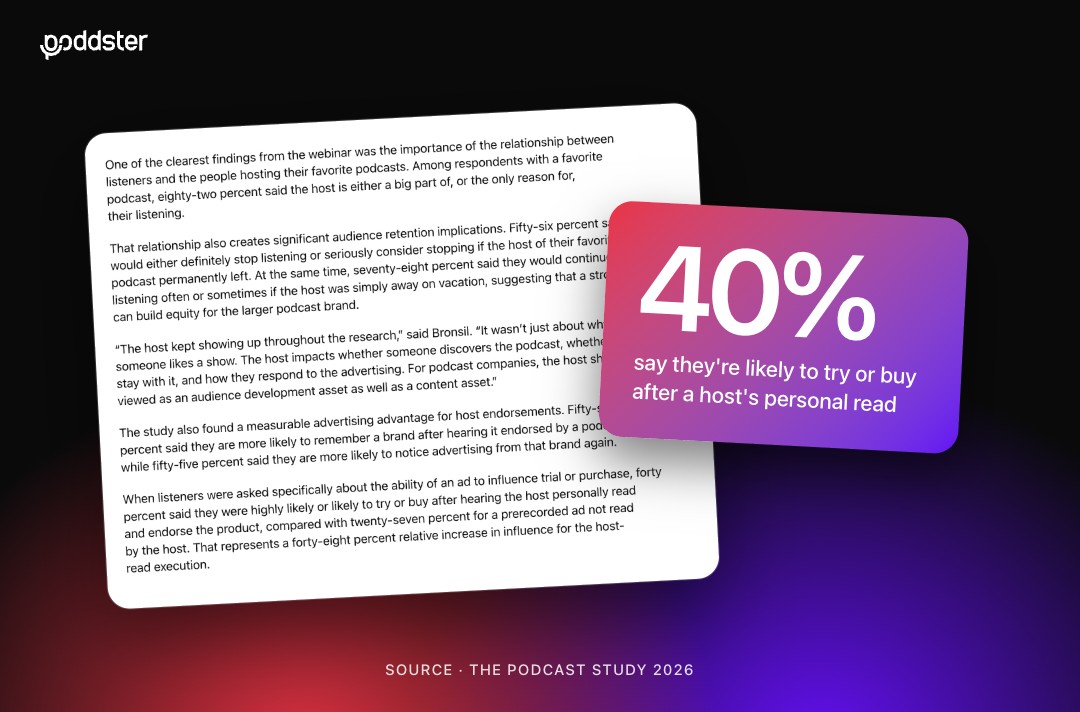
85% of creator-show fans see their favorite host as a friend.
Read the numbers with care. The 81% figure applies to the 85% who see the creator as a friend, not to all respondents. The answers are self-reported, the sample covers regular fans of creator shows rather than the general public, and Wondery, which sells podcast advertising, commissioned the work. It is useful evidence about how engaged fans feel. It is not a measure of what they actually buy.
The most useful finding for brands is about repetition. According to the report, 71% say a consistent presence across multiple episodes signals a genuine endorsement. About half of fans assume that a host did not like a brand that was mentioned once and never again. (The report gives that last figure only as "half", not as an exact percentage.)
Reports on the same research add that after multi-episode partnerships, 70% say they are more likely to trust the brand, 68% say it feels more premium and 67% are more likely to try it. Wondery also cites a separate Nielsen analysis it commissioned, which found ads rated high on authenticity delivered 148% higher lifts in brand familiarity and 51% higher lifts in purchase intent. That analysis shows an association, not proof that authenticity caused the lift.
Read more: why podcast clips work as a discovery engine, not just a view count.
We have seen the same pattern when we look at how listeners see podcasters compared with influencers: trust is built over time and it belongs to the host. Brands borrow it, and they only keep borrowing it if they behave like a guest in someone's home.
1. Plan for a season, not a spot.
Agree a partnership that runs across many episodes. A single read is easy to buy and easy to forget.
2. Choose the host before the show.
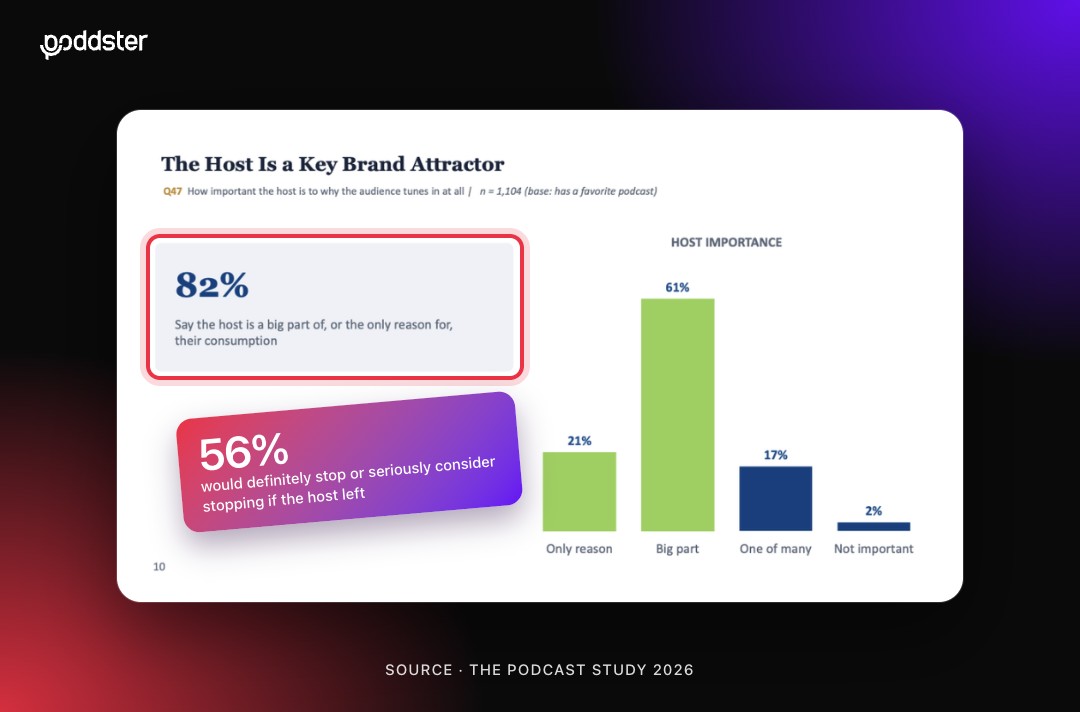
Because 90% of respondents say the creator is the main reason they tune in, the person matters more than the category. Ask whether the host would use your product anyway.
3. Give the host room.
Provide facts and goals, not a script. Fans trust the host's judgment, so let it show.
4. Build your own voices too.
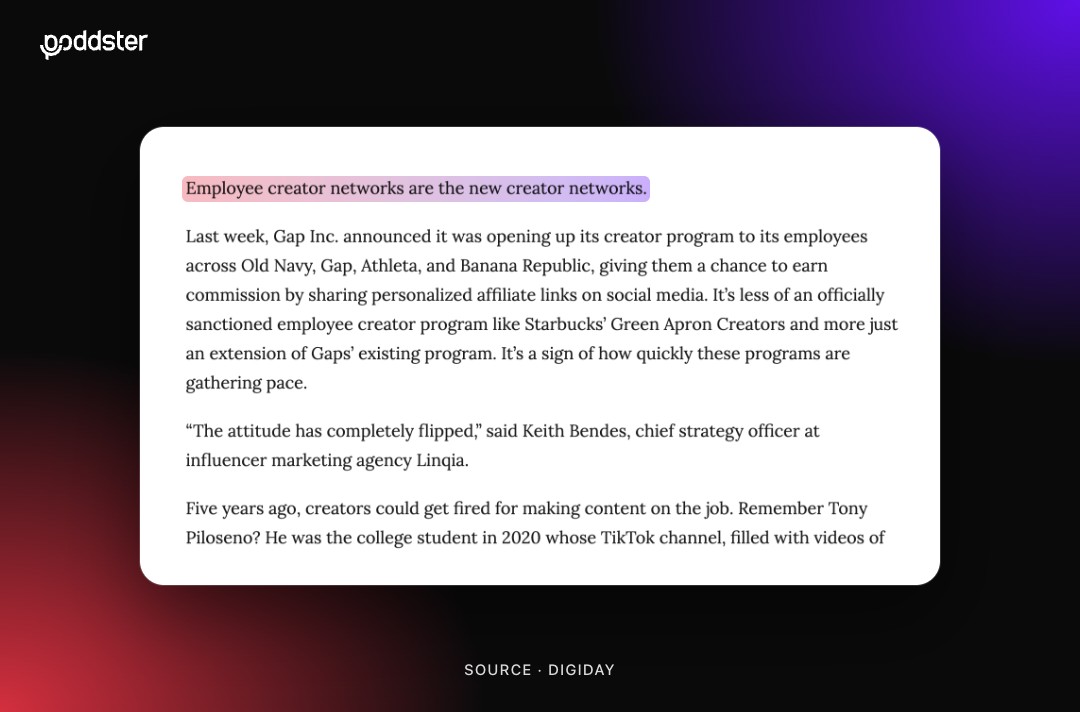
The same logic applies inside a company. When employees host or appear on a show, the trust attaches to people rather than a logo. Our look at what brands get wrong with employee creator programs covers how to avoid the common mistakes.
5. Measure beyond the mention.
Track branded search, direct traffic and conversations, not only downloads. Agree the measures with the host before you start.
If listeners treat hosts as friends, then a brand's job is to be introduced by a friend and to stay around long enough to be taken seriously. That is a slower plan than buying a spot, and it is the one the data supports.
If you are considering a branded podcast or a long-term host partnership, talk to the Poddster team about what would suit your brand.




Join 5.1K podcasters, creators, and brands already producing, editing and growing their video content with the world's #1 podcast studio brand.