Get Started
Get Started


YouTube and Instagram are both cutting the reach of reposted material. Here is how to cut and post your podcast clips so they read as original.

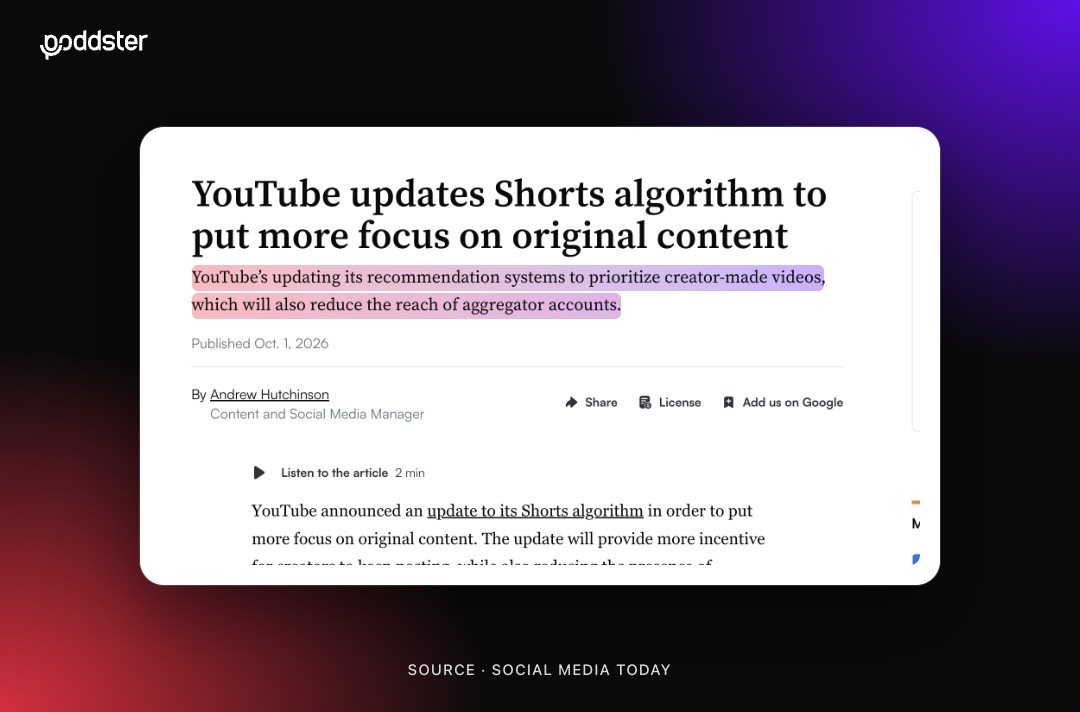
Short-form video platforms have a problem: too many accounts that simply repost other people's best moments. In 2026 they are acting on it. If your podcast strategy relies on clips, this affects you, even though your clips come from your own show.
On October 1, YouTube announced it has updated its Shorts recommendation systems to give more weight to original content and less to reposted material. The stated aim is to reduce the reach of content re-uploaded from other creators. YouTube says channels primarily aggregating or re-uploading other people's videos will likely see less distribution in the Shorts feed, and ties the change to its existing spam policy, which discourages reposting material without adding anything of your own.
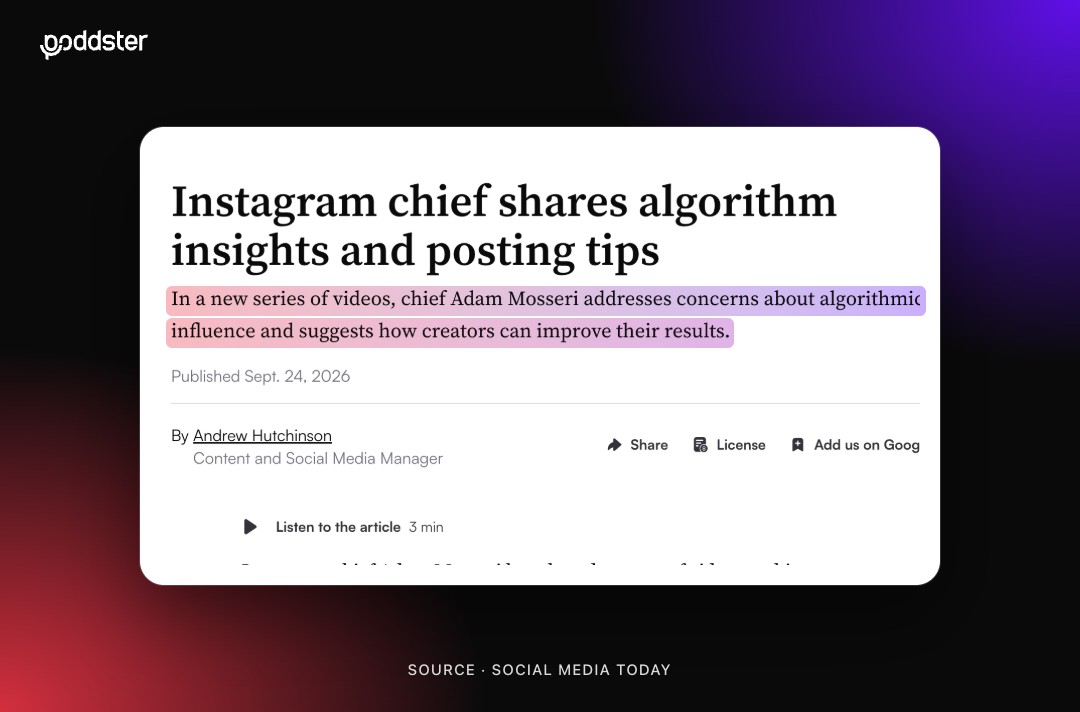
Instagram moved first. It announced a similar change in April, stopping recommendations of aggregator accounts in its discovery surfaces, and Instagram head Adam Mosseri said the reach of original content there has increased significantly, though no figures were given.
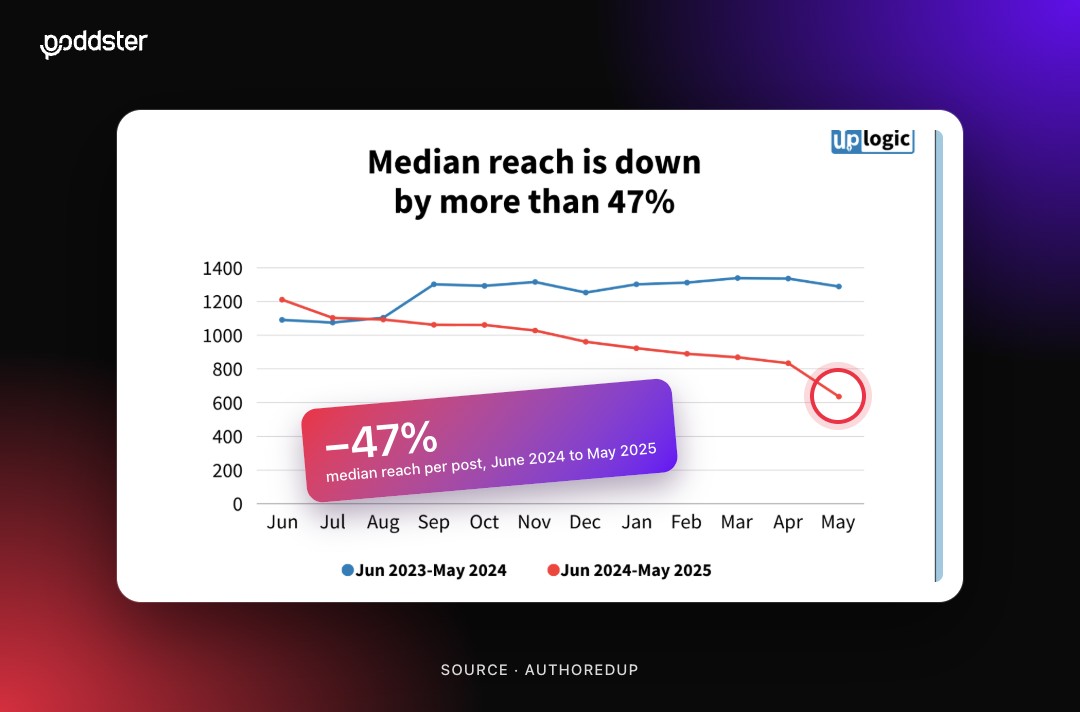
Neither platform has published numbers on how large the effect is, so treat any specific percentage you see quoted with suspicion until it is sourced.
Read more: YouTube is demoting re-uploaded clips in Shorts, and what it means for your clipping strategy.
A clip cut from your own episode is original in the plain sense. The danger is in how clips get used. Three situations are worth watching:
YouTube's own advice for anyone using existing footage is to add original commentary, unique editing or storytelling. We would turn that into a clip routine:
1. Start with a hook written for the platform.
Open with the question or claim, not the pleasantries. Write the first line for the platform you are posting to, not for the full episode.
2. Edit natively.
Reframe for vertical, add captions that match the platform's style, and cut for pace. Our guides to what TikTok rewards in podcast clips and to how the Instagram algorithm treats clips cover the details for each.
3. Add something of your own.
A short on-screen setup, a host's reaction recorded after the fact or a one-line takeaway turns a slice of audio into a piece of content.
4. Post from your own accounts first.
Your show's channels should be the original source. Anything shared by others then reads as amplification rather than the main event.
5. Brief anyone who clips for you.
If guests, fans or a network post your clips, ask them to add their own framing, tag the show and avoid re-uploading your finished files.
None of this changes the real job of a clip. As we argue in why clips are a discovery engine and not a standalone metric, a clip succeeds when it sends someone to the show. Originality rules make that job harder for lazy reposting and easier for teams who make clips with care.
If you want a clipping workflow built around each platform's rules, get in touch with Poddster.



Join 5.1K podcasters, creators, and brands already producing, editing and growing their video content with the world's #1 podcast studio brand.