Get Started
Get Started


Adam Mosseri has laid out what actually drives reach on Instagram, from recency to originality. Here's how to apply it when you post podcast clips as Reels.

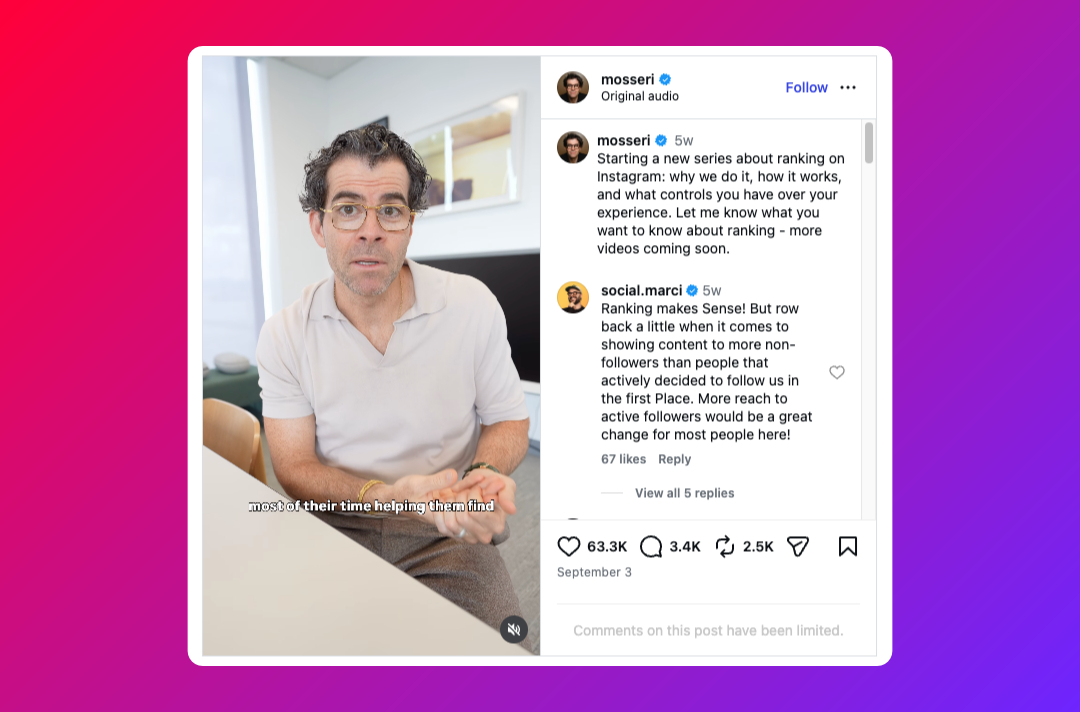
Instagram's algorithm has a reputation for being a black box. So when the person who runs Instagram sits down to explain how it works, it's worth paying attention. In late September 2026, Adam Mosseri shared a series of posts on his own account explaining how Instagram ranks content and what creators should focus on. If you're posting podcast clips to Instagram, several of his points apply directly.
As reported by Social Media Today, Mosseri's explanation came down to a handful of principles.
He also explained why ranking exists at all: without it, feeds would be dominated by whoever posts most often, and as he put it, "business and brands post a lot more than creators and people."
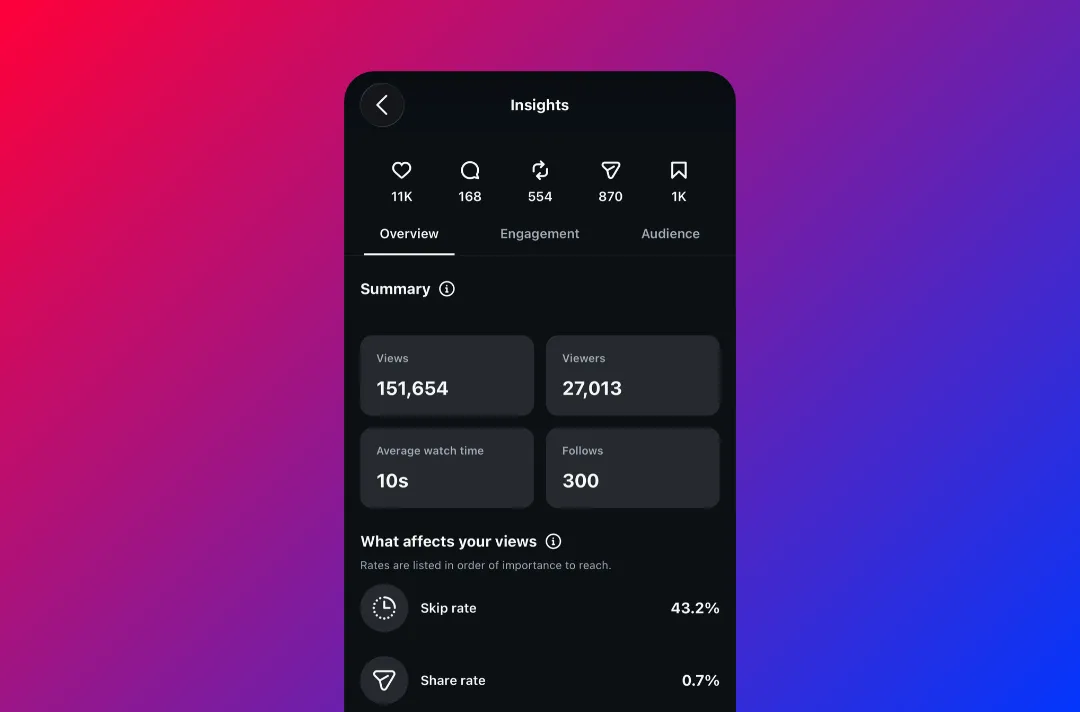
His practical advice was to track engagement rate rather than total views or likes, and to use Trial Reels to test new content.
Instagram doesn't reward the account that posts the most. It rewards the post people actually watch and pass on.
Mosseri's comments build on changes Instagram has already made. In April 2026, Instagram stopped recommending photos and carousels from aggregator accounts in Explore and other recommendation surfaces, extending a rule that already applied to Reels. An account counts as an aggregator if most of its posts over a rolling 30-day window are reposts, and simply speeding up someone else's clip or adding a credit doesn't count as adding value.
YouTube has been moving the same way. We covered its decision to demote re-uploaded clips in Shorts, and the logic is identical: platforms want to reward the people who made the content.
Read more: This podcast stopped making the full episode the point. Its clips are the show.
1. Post from your show's own account
If clips of your podcast mainly circulate through fan pages or clip accounts, those accounts are now the ones losing reach. Publish clips natively from the show's own account, or from the host's account, so the original source is clear.
2. Aim for 15 to 60 seconds, but don't be afraid of longer
Instagram's own Reels guide, published in September 2026, describes 15 to 60 seconds as the "sweet spot," with 60 seconds to three minutes suited to storytelling. Reels can now run up to three minutes. For podcasts, a strong 30 to 50 second moment is a good default, with longer clips reserved for stories that genuinely need the time.
3. Hook viewers in the first second
Instagram says Reels that are high-quality, original, and engaging from the very first second are more likely to be recommended. Start on the most interesting line, not a slow introduction.
4. Caption every clip
Instagram recommends captions even when a Reel has text overlays. For speech-heavy podcast clips, burned-in captions are essential, since many people watch with the sound off.
5. Test with Trial Reels
Trial Reels are shown to non-followers first, so you can try a new style of clip without it affecting what your existing audience sees. Use them to test hooks, lengths, and caption styles before committing.
6. Post when your audience is active
Because recency matters so much, posting when your followers are actually online gives each clip a better start. Check your Instagram insights for when your audience is most active.
If ranking is built on whether people watch and share, those are the numbers to watch. A clip with modest reach but a high share rate is telling you something valuable about what resonates. A clip with big reach and almost no engagement probably got lucky once.
That's also why it helps to understand how much control viewers now have. We looked at what Instagram's reluctance to let people choose their own feed means for clip reach, and it points the same way: make content people actively want to pass on.
If you'd like help turning your episodes into clips that perform on Instagram, get in touch with Poddster.







Join 5.1K podcasters, creators, and brands already producing, editing and growing their video content with the world's #1 podcast studio brand.