Get Started
Get Started


Substack has opened early access to sponsorships for podcasts it hosts. Here is what is confirmed, what is still unknown, and how to decide whether it belongs in your plans.

Substack started as a newsletter platform. Now it wants a bigger share of podcast advertising too. On October 21, 2026, it announced that sponsorships are coming to podcasts hosted on its platform, with early access signup open for part of the package.
If your show lives on Substack, this is a monetization option to watch. If it lives somewhere else, it is a useful prompt to check how your own ad setup would hold up. Here is what is actually confirmed, and what is not.
Substack described three pieces. Only the first is open for signup today.
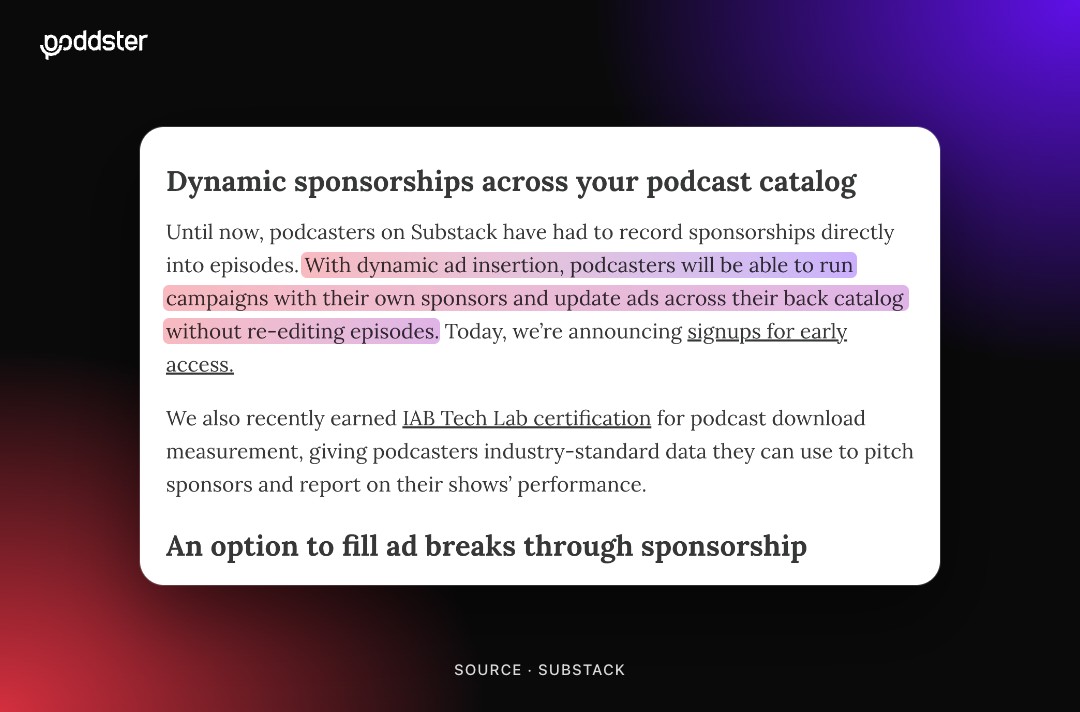
1. Dynamic sponsorships across your catalog. Creators can run campaigns with their own sponsors and update ads across their back catalog without re-editing episodes. That matters because old episodes keep getting plays long after launch week, and a sponsor message baked into the audio goes stale. Early access signup is open now.
2. Ad breaks filled through sponsorship marketplaces. Creators will be able to use third-party marketplaces to fill the ad breaks they mark in an episode. Substack lists this as coming soon. Participation is optional, and creators set limits on how many ads run and which sponsor types they accept. You can use your own sponsors, marketplace sponsors, or both.
3. An ad-free community for your biggest fans. This one is not new. Paid subscribers can already get bonus and ad-free episodes, and podcasters can organize community chat into channels.
Substack also says it recently earned IAB Tech Lab certification for podcast download measurement, which creators can use when pitching sponsors and reporting results.
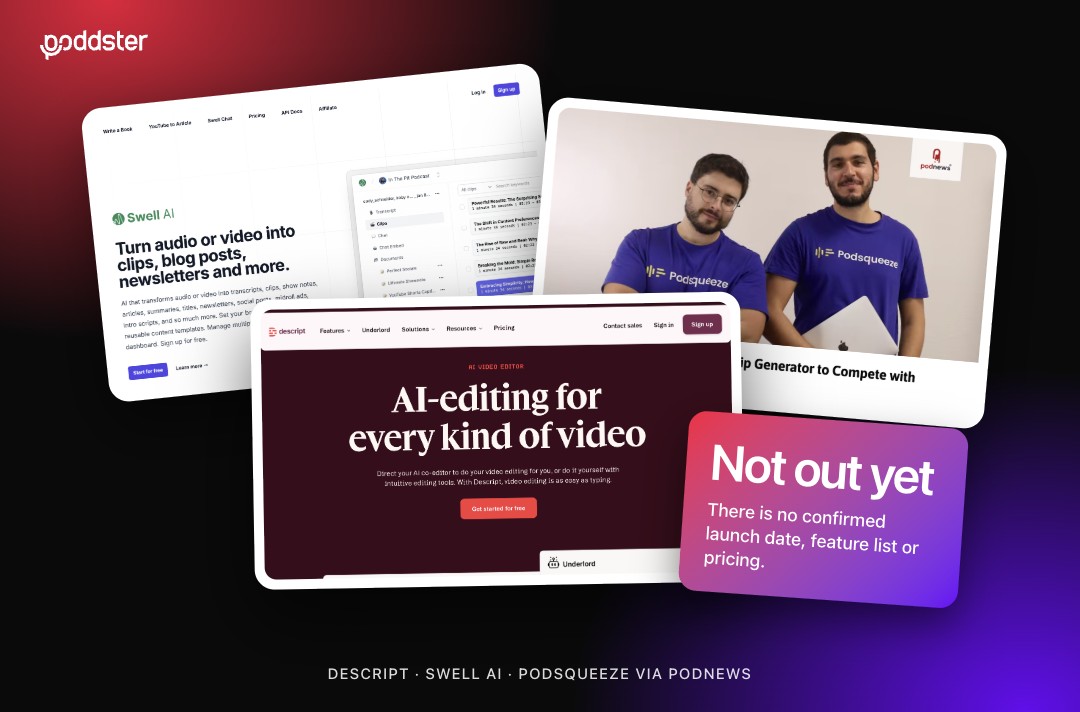
The announcement gives no launch date. It does not spell out revenue share or payout terms either. And while it names IAB certification for download measurement, it does not say how attribution, video delivery or reporting will work for sponsors who want proof of performance.
That gap is the real story. Dynamic ad insertion is hard to run well, and buyers will want to know how a new platform handles measurement before they put real budget behind it. Until those answers exist, any sponsorship plan built on Substack is a plan built on assumptions.
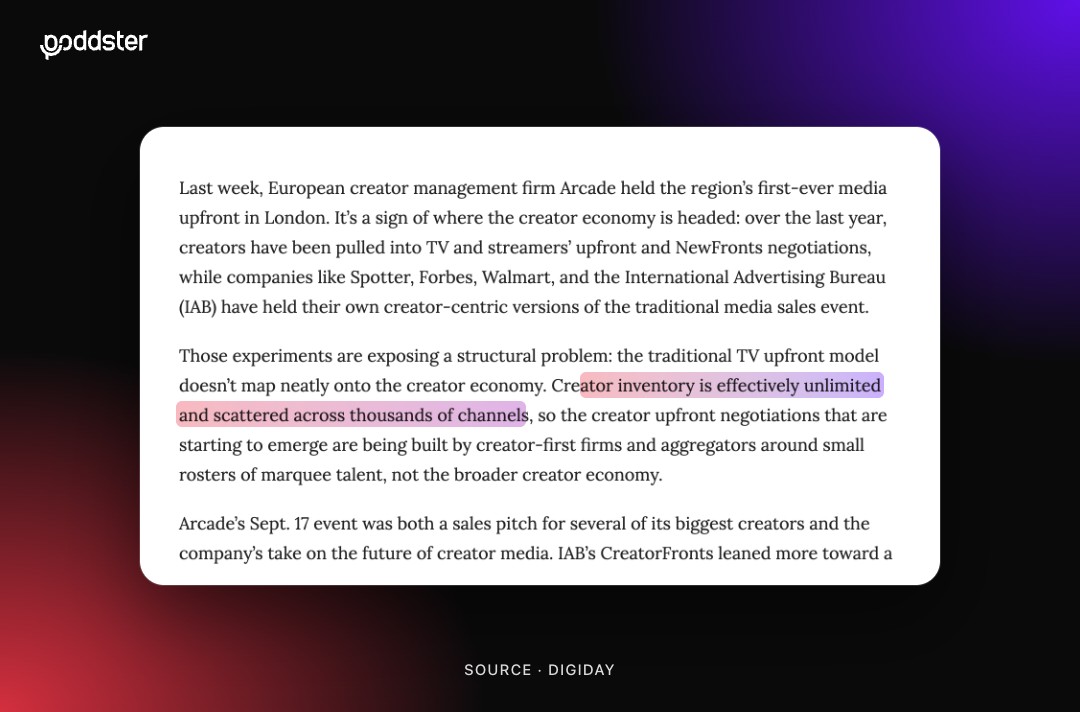
Read more: Why creators want upfront deals like TV networks, and why most cannot have one.
This announcement is most relevant if one of these describes you:
If you are in the last group, slow down. Substack has already added a native podcast tab as a new distribution lane, but a distribution lane and a proven ad business are different things. Compare it with your current host on what you actually need: analytics, ad tools, video support and the ability to leave with your feed intact. Our comparison of podcast hosting platforms is a good starting point for that checklist.
You do not need to move anything to be ready. Here is a short checklist that works whatever platform you end up on.
1. Mark your ad breaks on purpose. Dynamic insertion needs defined slots. Decide where breaks belong in each episode format, and keep the total number low enough that listeners do not feel it.
2. Write down your sponsor rules. Which categories are a fit, which are off limits, and how many ads per episode is your ceiling. Substack says creators will set these limits themselves, so having them written down makes every offer easier to judge.
3. Know your numbers. Sponsors ask for downloads, listener location, and increasingly video views. Make sure you can export clean figures from your host today.
4. Keep your audience reachable. A show that depends on one platform for its listeners is exposed to that platform's rules. A companion newsletter gives you a channel you control, whichever ad tools come and go.
5. Test small. If you get early access, run one campaign on one episode series before touching the whole catalog, and compare the results with your current setup.
Substack entering podcast advertising is a sign of where the market is heading: more platforms competing to be the place where creators get paid. For most shows, the right response is preparation, not migration. Get your ad breaks, sponsor rules and reporting in order, then judge the offer on its terms when the terms exist.
Want help building a podcast monetization plan that works across platforms? Get in touch with the Poddster team and we will help you map it out.







Join 5.1K podcasters, creators, and brands already producing, editing and growing their video content with the world's #1 podcast studio brand.