

Get Started
Get Started


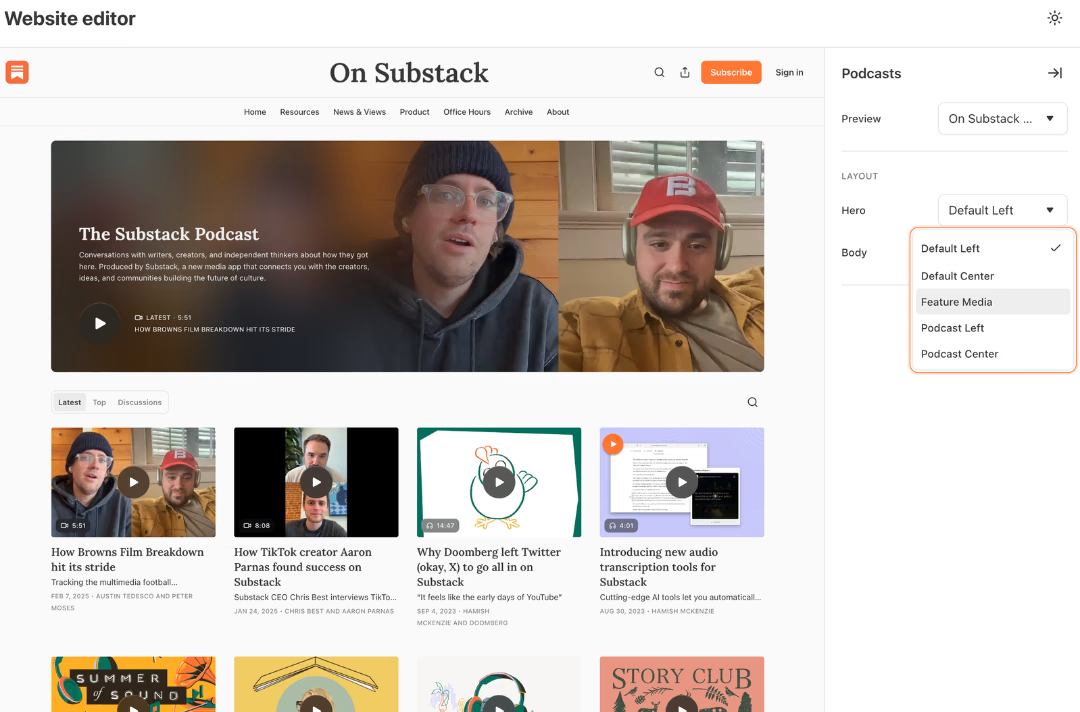
Substack has quietly been building toward being a lot more than a newsletter platform, and its new Podcast tab is the clearest evidence yet. As of this month, podcasts a user subscribes to get their own dedicated space in the Substack app, sitting next to the Read tab that's long been the platform's default view.
The Podcast tab groups together the shows a user already subscribes to and also surfaces other podcasts on the platform, positioning Substack as a place people go specifically to listen, not just a newsletter app that happens to host some audio. It's part of a longer pattern: over the past year and a half, Substack has rolled out native video publishing, livestreaming, a built-in recording studio for solo or two-guest conversations, a TV app, and an auto-clipping tool that pushes creator content out to YouTube.
Substack's own framing for the change is about connecting existing shows with the audience that's already there, and with people newly discovering the platform. That's a meaningfully different pitch than a traditional podcast app, which is built around open discovery across an entire catalog rather than a writer's specific subscriber base.
It's worth being clear-eyed about what a Podcast tab changes and what it doesn't. Early coverage of the launch has already noted that having a dedicated tab isn't the same as guaranteed downloads: reach on Substack is still tied heavily to how well a creator has built their subscriber base through writing, not to any built-in podcast discovery engine comparable to Spotify's or Apple's. A show showing up in someone's Podcast tab depends on that person already being a subscriber, which makes this a retention and engagement tool first, and a discovery channel a distant second.
Where it's genuinely useful is for a show that already runs a companion newsletter on Substack, or is considering one. Rather than sending subscribers off-platform to a separate podcast app every week, the show now lives inside the same app the newsletter does, which lowers the friction between someone reading an issue and actually pressing play on the matching episode.
The auto-clipping tool Substack rolled out alongside its other audio and video features is arguably more interesting for most shows than the Podcast tab itself. Rather than adding a new place for an audience to gather, it pushes a show's content out to where audiences already are, specifically YouTube, without requiring a separate editing workflow. That's a lower-commitment way to test whether Substack's broader ecosystem is worth investing in before building a dedicated podcast presence there.
For most independent or branded podcasts without an existing Substack newsletter, this update alone isn't a strong enough reason to add another platform to the distribution list. The value is concentrated with shows that already have, or are planning, a companion newsletter as part of their content strategy, where the Podcast tab removes a real point of friction between the two formats rather than adding a new channel to maintain from scratch.
If a companion newsletter is already part of your show's plans, or if a meaningful share of your audience already reads on Substack, this update is worth testing. If it isn't, there's no urgency to build a Substack presence purely because the feature now exists.
Not sure whether a companion newsletter or a new distribution channel is worth your team's time? Poddster can help you map out where your show's audience actually is before you build for a platform that isn't there yet.


