Get Started
Get Started


Global product placement spending keeps growing at double-digit rates, and music and audio, driven by host mentions in popular podcasts, grew fastest. Here is what it means for brands.

Brands have long paid to appear inside the content people already watch and enjoy. A new forecast shows that spending is still growing quickly, and that podcasts are helping drive one of its fastest-moving corners. For brands considering a podcast, it is a useful signal about where attention and budgets are heading.
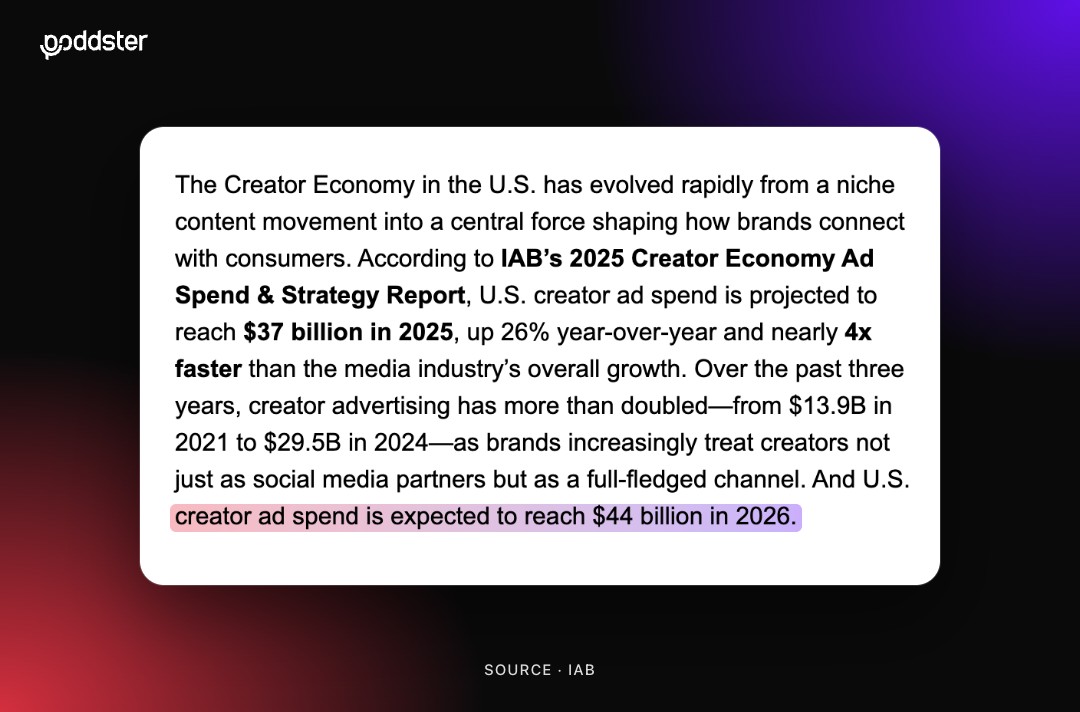
PQ Media's Global Product Placement Forecast reports that worldwide spending on product placement grew 12.7% in 2025 to $37.16 billion. It forecasts $41.92 billion for 2026, which would be a sixth consecutive year of double-digit growth. The United States accounts for about 56.5% of the total, or $21.01 billion.
Television still dominates, at $26.16 billion, followed by film at $4.44 billion. Music and audio was the fastest-growing category in 2025. Reports of the forecast put its growth at between 13.5% and 13.8%, so it is safest to say "above 13%". It generated about $502 million worldwide.
Product placement spending is forecast to reach $41.92 billion in 2026, a sixth straight year of double-digit growth.
PQ Media names popular podcasts as a driver of the audio category's growth, especially shows where hosts talk about advertisers' brands and products. In practice, that means a host discussing a product they use or a business they have visited, woven into the conversation rather than read from a script.
The research gives two reasons brands like this format. The mentions are largely immune to ad-skipping technology, and they can keep generating exposure after an episode is released. One caution on the data itself: PQ Media's category covers podcasts alongside music, radio and similar formats, so podcast-only numbers are not available from this forecast.
The same forecast flags a limit. A slowdown in new podcast titles is raising concern about how many placement opportunities will exist in future. That makes established, trusted shows more valuable, and it makes it more important for brands to build relationships with them early.
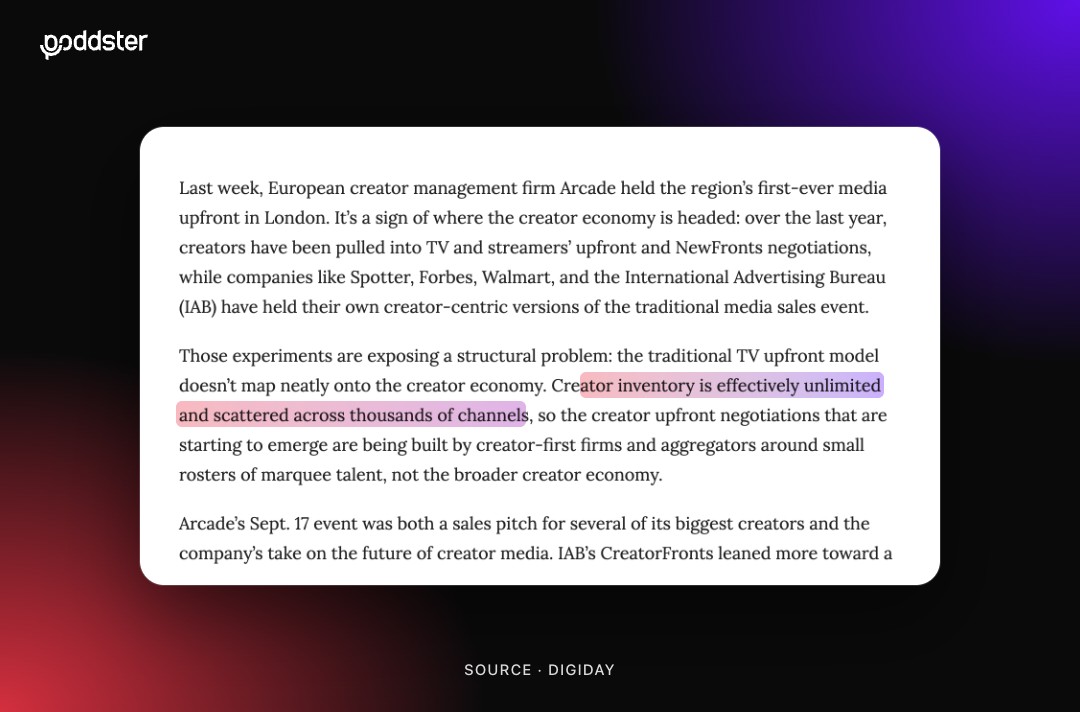
Read more: why creators want upfront deals like TV networks.
The appeal comes down to trust. Listeners spend long stretches with the same voice, and a mention from that voice carries weight. Our look at why listeners see podcasters differently from influencers shows how that trust translates into willingness to act on recommendations.
1. Start with fit, not reach.
A smaller show whose audience matches your customers beats a bigger show that does not. Ask what the host would honestly say about your product.
2. Let the host stay in their own voice.
The value of a placement is that it sounds natural. Provide facts and a clear idea of what matters, and avoid scripts that make the mention sound like an ad.
3. Disclose paid relationships.
Follow the advertising disclosure rules where you and the show operate, and agree on wording in advance. Trust is the whole asset, and it is easily lost.
4. Decide how you will measure it.
Mentions are harder to track than a spot with a code. Agree on a measure before you start, such as a dedicated link, a search-lift check or a brand-recall survey. Our article on why distribution and measurement matter more than content quality in B2B podcasts explains why this step gets skipped and why it should not.
5. Think about owning the show.
If you are placing your brand across many shows, ask whether your own branded podcast would give you more control over how your products and expertise are discussed.
If you are considering a branded podcast or want to plan how your brand shows up in audio, speak to the Poddster team.




Join 5.1K podcasters, creators, and brands already producing, editing and growing their video content with the world's #1 podcast studio brand.