Get Started
Get Started


The most-subscribed podcast on YouTube now gets nearly a quarter of its views on non-English audio tracks. Here is how to tell whether dubbing makes sense for your show, and how to test it without a big budget.
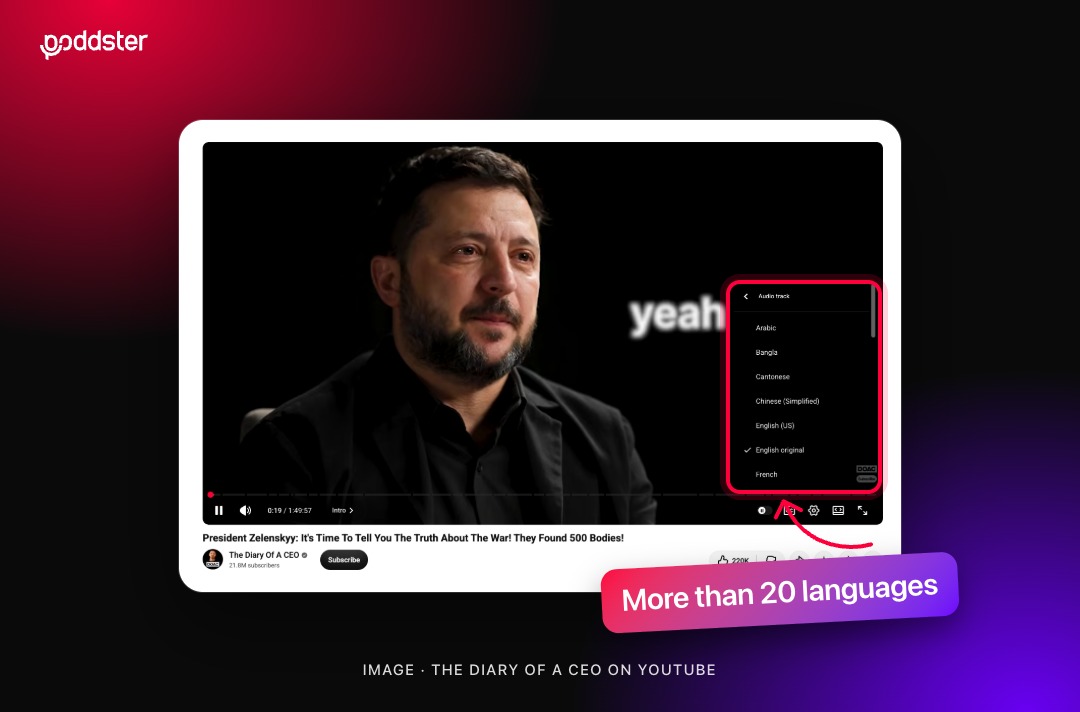
The biggest podcast on YouTube has a new name at the top. The Diary of a CEO reached 21.3 million subscribers on 1 November, passing The Joe Rogan Experience at 21.2 million.
The more useful story sits behind that headline. According to FlightStory, the show's producer, about 261 million of its views from January to October came through non-English audio tracks. That is 23.3% of the total, led by Spanish, Russian, German, Portuguese and French.
Most shows treat language as fixed. This one treated it as a growth channel. You probably don't need 20 languages, but you do need to know whether one more would pay off.
Dubbing was not a quick win. Steven Bartlett told The Publish Press the work took almost three years, and that the first two brought no luck. The team could not get the retention it needed at first.
The show is now in more than 20 languages, and in over half of them people listen for longer than they do in English.
Two details matter here. First, the producer's numbers come from its own YouTube data, so read them as a company's account of its own success. Second, this is a show that already had a huge English-speaking audience, a big team and a lot of episodes. Its result tells you dubbing can work at scale. It does not tell you what will happen on a channel with 5,000 subscribers.
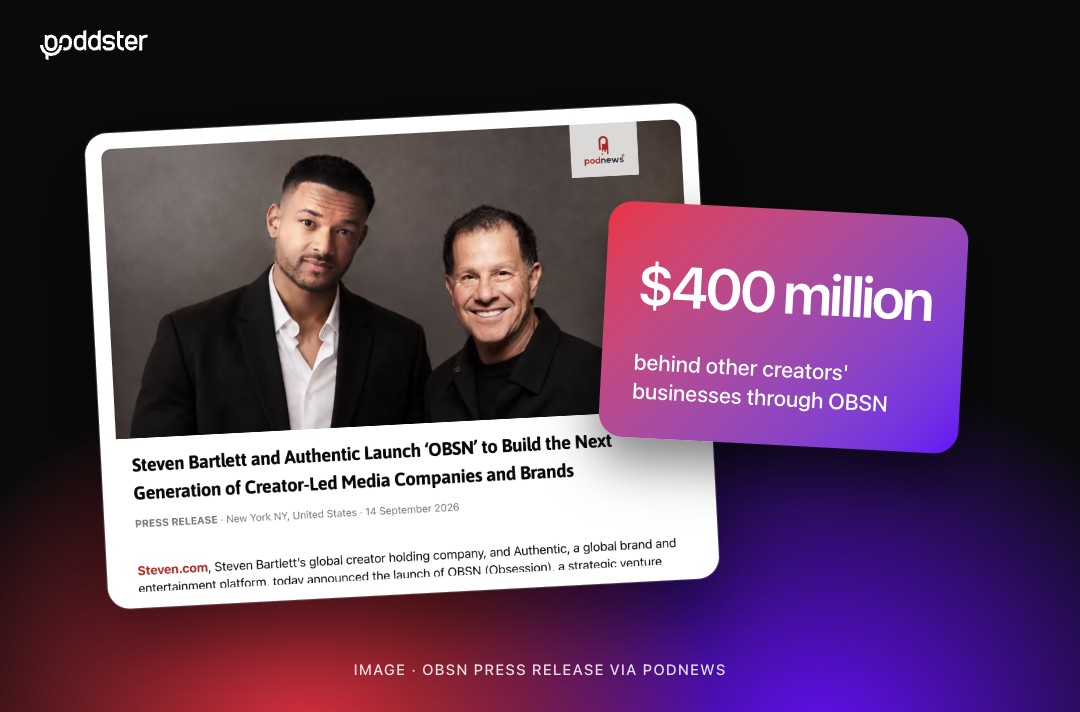
Even so, the direction fits the wider picture. Bartlett's move into a creator company gets most of the attention, but language may be the more copyable part of his playbook. And with podcast audiences growing worldwide, more of your potential listeners won't have English as a first language.
Read more: Why YouTube is quietly becoming your podcast's front door
1. Automatic dubbing
YouTube creates the dubs for you, and the feature is on by default for eligible creators. It is the cheapest test you can run, with some limits podcasters need to know:
2. Multi-language audio
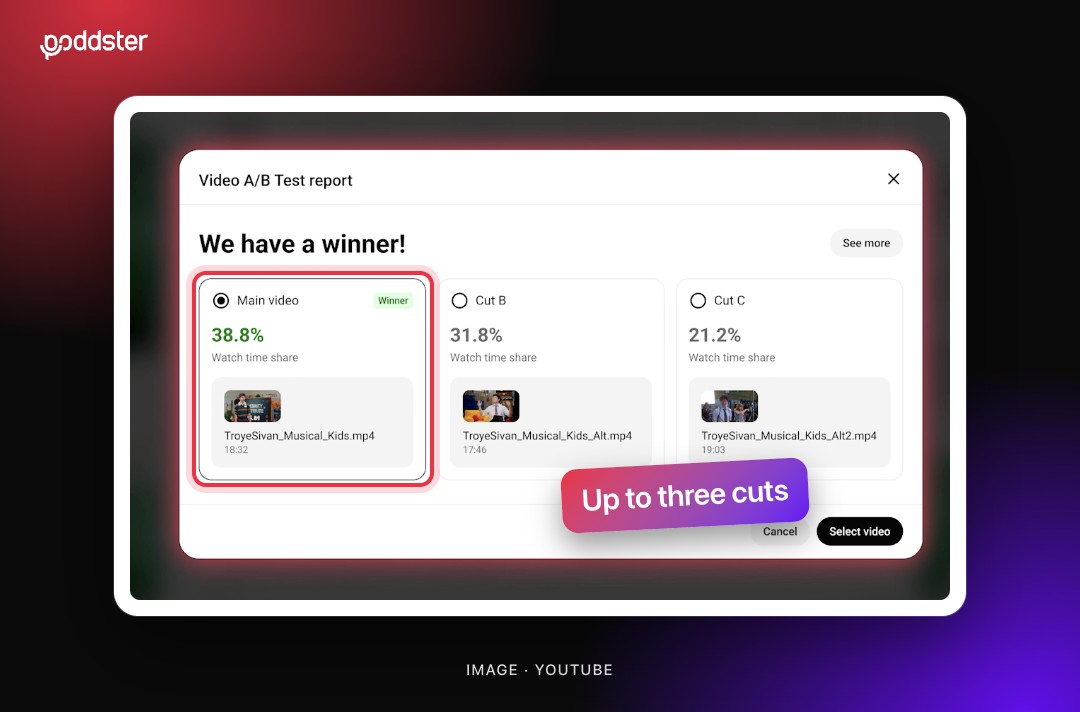
You upload your own dubbed tracks to a single video, and viewers hear their preferred language by default. It needs access to YouTube's advanced features, and each file must be audio-only and roughly the same length as the video. YouTube says creators who uploaded these tracks saw over 25% of their watch time come from views in a non-primary language.
The trade-off is simple. Automatic dubbing costs little but gives you less control. Your own tracks cost more but let you protect names, tone and technical terms.
Start with evidence, not ambition.
For brands, add one more check: have a native speaker review anything regulated, legal or technical before it goes live.
The Diary of a CEO's Zelenskyy episode was recorded in Ukrainian with two human interpreters, then made available in more than 20 languages using AI voice technology. That is a sensible mix of people where accuracy matters most and automation where scale matters most.
If you use synthetic voices, decide up front how you'll tell your audience. We've covered when and how to disclose AI use in more detail, and the safest default is to be open about it.
Want to work out whether a second language makes sense for your show? Talk to the Poddster team.







Join 5.1K podcasters, creators, and brands already producing, editing and growing their video content with the world's #1 podcast studio brand.