Get Started
Get Started


A new survey of 1,001 US adults puts YouTube just ahead of TV news as people's main way to get information. Here is what that means for where your podcast should live.


For years, the question was whether online video would catch up with television as a place to get information. A new survey suggests it just did, at least in the United States. The finding comes with caveats, but the direction is clear, and it matters for anyone who wants their podcast to be found.
Syracuse University's Center for the Creator Economy published its first Industry Flash Report, surveying 1,001 Americans with research partner Prolific. Respondents named the source they use most to get news. The results:
Other findings point the same way. 60% of respondents said they turn to a social platform first when they are looking for information. 61% said they trust independent news creators as much as network broadcasters, and two-thirds said a creator's ability to report matters more than formal journalism credentials. Podcasts, newsletters and LinkedIn trailed the field.
16.5% of Americans name YouTube as their main news source, just ahead of TV news at 16.1%.
Two cautions before anyone quotes this. First, the gap between YouTube and TV news is 0.4 of a percentage point. The report does not give a margin of error, and a sample of around 1,000 people typically carries one of about three points, so YouTube and TV are best read as roughly level rather than YouTube clearly winning.
Second, the research comes from a university center that studies and teaches the creator economy, so it has an interest in findings that favor independent creators. That does not make the data wrong. It does mean it is one survey, and worth comparing with others before it drives a big decision.
Read more: News podcasts are the fastest-growing category right now, and what that means for brands.
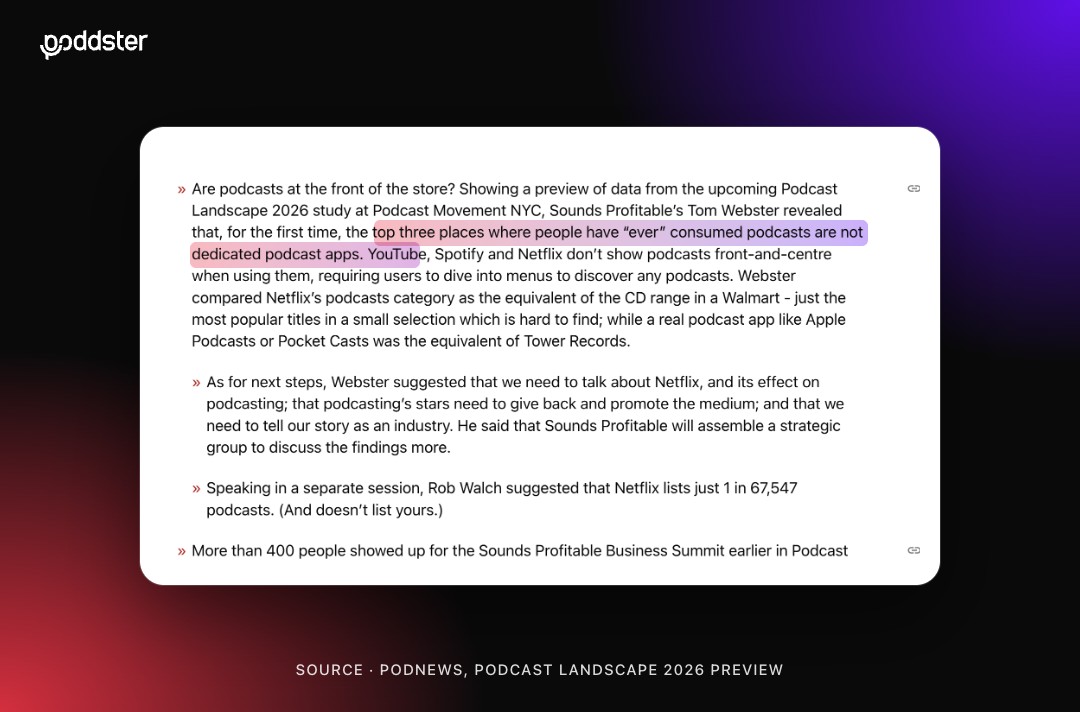
Podcasts did not feature among the top news sources in this survey, but that is not the point. The point is where people start when they want to learn something. If the first stop is a social or video platform, a podcast that only exists in audio apps starts at a disadvantage.
We have been making this argument for a while. YouTube has quietly become a podcast's front door, and discovery now happens in places that are not podcast apps. This survey adds one more data point: the habit of reaching for YouTube is spreading from entertainment into information.
1. Put every episode on YouTube.
A full-length upload with clear titles and descriptions is the minimum. It gives search and recommendations something to find.
2. Treat trust as a content strategy.
If audiences trust independent creators as much as broadcasters, then a recognizable host with a real point of view is an asset. Lead with who is speaking and why they know the subject.
3. Watch how viewers actually behave.
More views do not always mean more attention. Our piece on why YouTube podcast viewers skim long-form videos explains what to measure beyond the view count.
4. Do not abandon audio.
This survey says nothing against audio listening. It says your audience may meet you on YouTube first and move to your feed later, so make sure both doors are open.
If you want a plan for getting your podcast onto YouTube properly, talk to the Poddster team about video setup and channel strategy.



Join 5.1K podcasters, creators, and brands already producing, editing and growing their video content with the world's #1 podcast studio brand.