Get Started
Get Started


UK download data shows independent podcast apps losing share, and another indie app has just been sold. Here is what to check in your own stats.


Independent podcast apps once offered a real alternative to the big platforms: better features, a loyal user base and a way for small teams to compete. New data suggests that era is ending, and a fresh acquisition adds to the picture. For anyone who publishes a podcast, the question is what to check in your own distribution.
Podnews analysed UK podcast downloads for a keynote at The Podcast Show London. It looked at the share of downloads going to independent podcast apps, meaning apps outside the largest platforms:
That is a seven-point drop in two years. The figures are for the UK only. Podnews has not published equivalent numbers for other countries in this analysis, so please do not assume the same trend in your market.
Independent apps took 38% of UK podcast downloads in 2024. In 2026 they take 31%.
Around the same time, Podnews reported that Maple Media has bought the Castro podcast app, according to the app's App Store listing. The company had not commented when the story ran. Maple Media buys apps, and has previously bought Player FM, Podkicker and Breaker. Castro's previous owner, Dustin Bluck, had acquired it in January 2024 and recently wrote a blog post describing independent podcast apps as "dying".
One acquisition does not prove a trend, but together with the download data it points in one direction: listening is concentrating on a small number of large platforms.
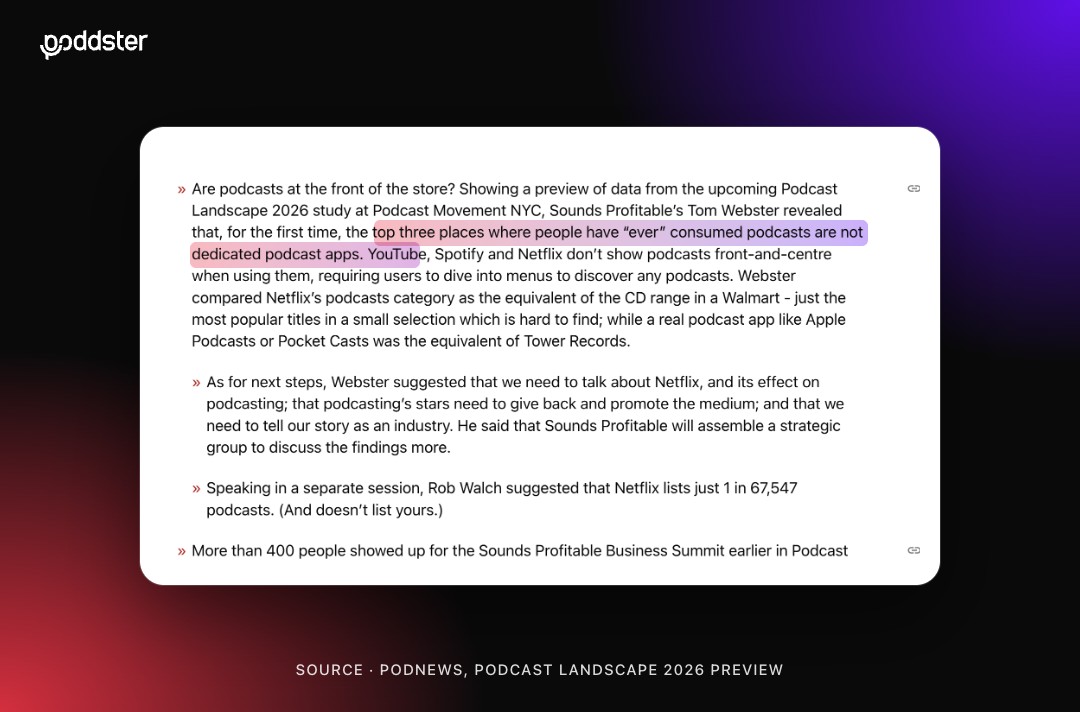
Read more: why podcast discovery is no longer happening in podcast apps.
You do not need to panic, and you do not need to drop anyone. You do need to look at your own numbers, because your audience may not match the UK average.
1. Open your hosting analytics and sort by app.
Look at how downloads split between the large platforms and everything else. If a meaningful share goes to a smaller app, find out which one and whether it is growing or shrinking for you.
2. Make sure the big platforms are working properly.
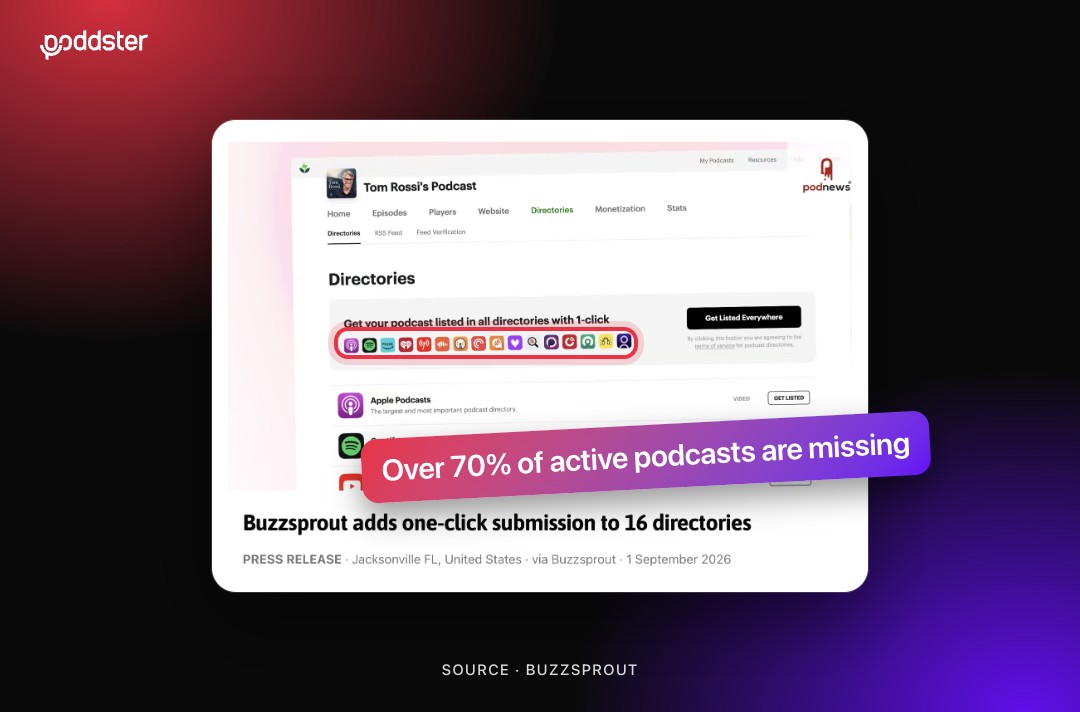
Cover your listing, artwork, descriptions and video settings on the platforms where most listening happens. Our podcast directory distribution audit shows how to confirm your show is listed where it should be.
3. Do not rely on any one app for your audience relationship.
If an app you depend on is sold, changed or closed, you should still be able to reach your listeners. A newsletter, a website and a YouTube channel all give you ways to do that.
4. Keep your RSS feed clean.
The feed is what lets listeners use whichever app they prefer, including smaller ones. Keep it valid, keep your show details current and avoid changing the feed URL without a proper redirect.
As listening concentrates on fewer platforms, video platforms in particular take a larger role in how people find shows. We covered that shift in why YouTube is becoming your podcast's front door. The practical conclusion is not to abandon independent apps but to stop treating them as the foundation of your distribution plan.
If you would like a second pair of eyes on your distribution setup, contact the Poddster team.



Join 5.1K podcasters, creators, and brands already producing, editing and growing their video content with the world's #1 podcast studio brand.