Get Started
Get Started


Some of YouTube's most trusted explainer channels have built fact-checking into every stage of production. Here's how they do it, and a simple workflow any podcast can adopt.

One wrong number can undo a lot of good work. A podcast episode that misquotes a statistic, a clip that gets a date wrong, or a guest claim that turns out to be false can stick to a show, and to the brand behind it, for a long time. That's why some of the most trusted creators on YouTube treat fact-checking as part of how they make content, not something they tidy up at the end.
In October 2026, The Publish Press spoke to creators behind several respected explainer channels about how they check their work. Their methods are surprisingly practical, and almost all of them translate directly to podcasting.
Howtown, the channel run by journalists Adam Cole and Joss Fong, treats fact-checking as continuous. "It's sort of an ongoing process that's always happening all the time," Cole said. They also scale their effort to the claim: the more important a claim is to the story, the more sources they look for. With only the two of them reviewing each other's work, Cole acknowledged the limits of a small team compared with a newsroom.
HUGE* If True, Cleo Abram's science channel, starts before writing. Science producer Nicole Menkart said the team does background interviews before scripting, checks claims against at least two sources, and follows up with experts on anything unclear. They also hold a table read, reviewing the script out loud as a team. "It helps catch any remaining errors or unintended phrasing," Menkart said.
fern, a larger documentary channel, has around 100 people working on its videos, including a dedicated fact-checking team, and has said it can spend weeks researching and speaking with experts before scripting.
Trust takes years to build and seconds to lose. Fact-checking is how you protect what you've built.
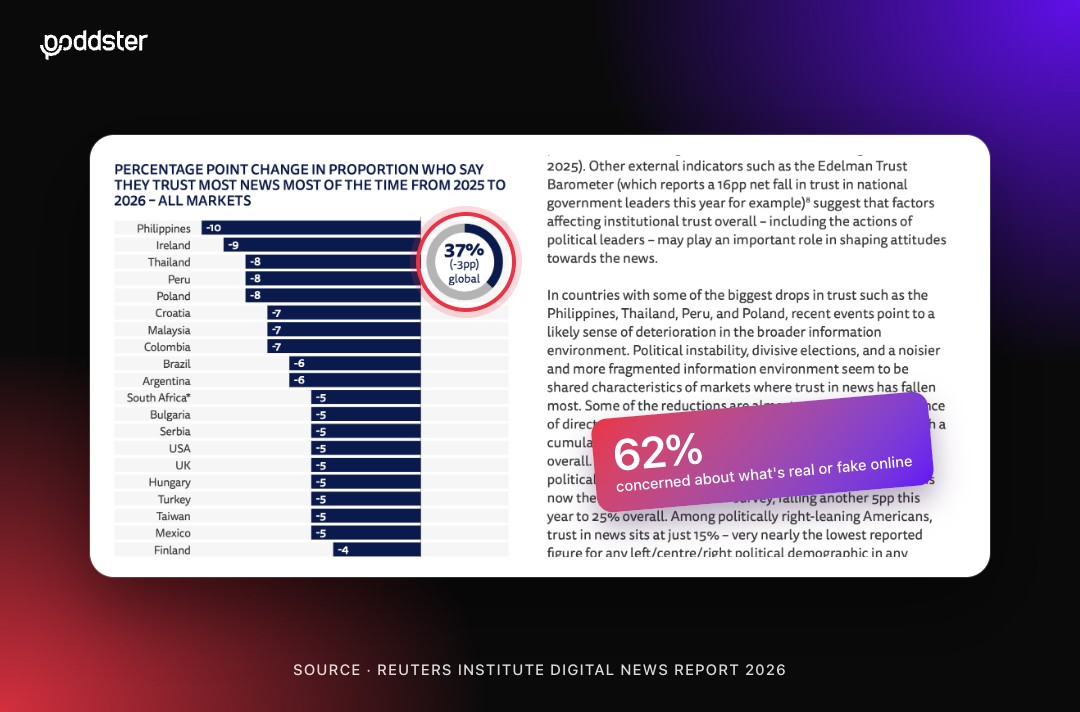
Audiences are more sceptical than ever about what they see and hear. The Reuters Institute's Digital News Report 2026 found trust in news has fallen to 37% globally, the lowest level since tracking began in 2015, and 62% of people say they're concerned about what's real or fake online.
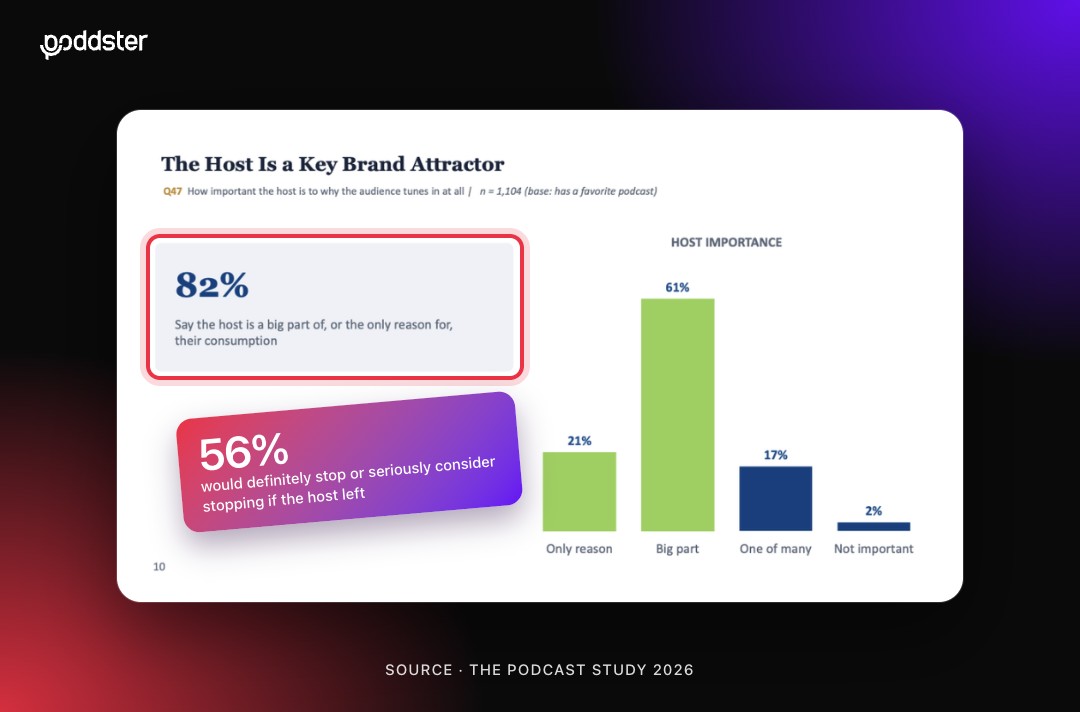
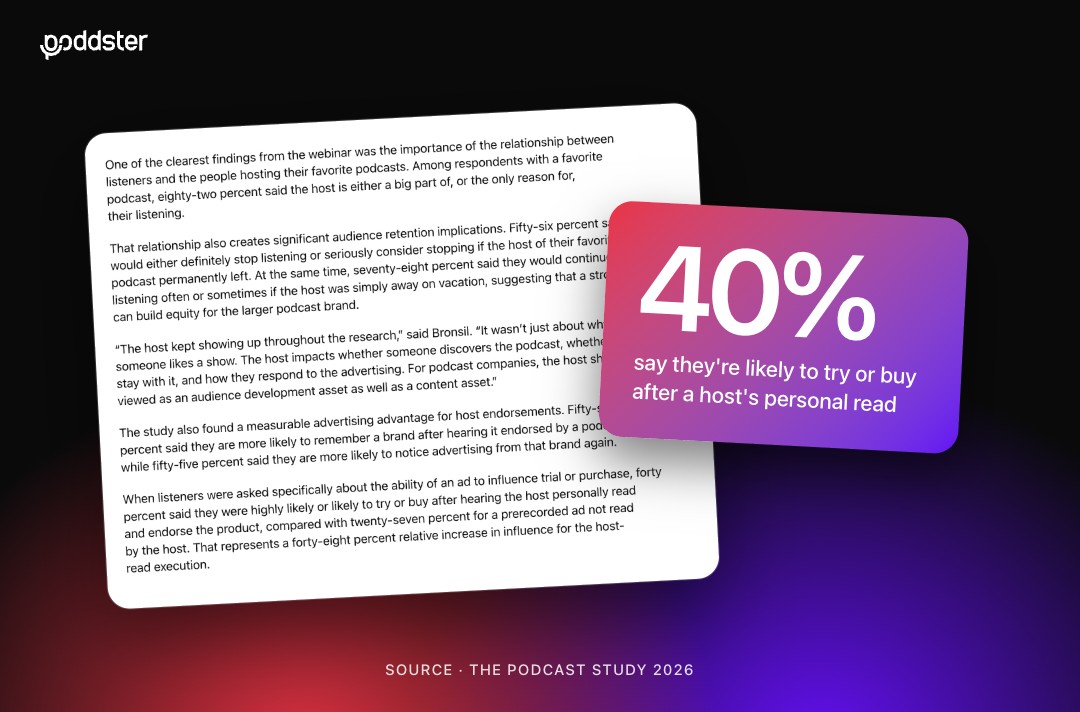
Podcasts start from a strong position. Research from Cumulus Media and Signal Hill Insights found 56% of US weekly podcast listeners say podcast hosts are the type of influencer that matters most to them. That trust is valuable, and it's exactly why getting facts wrong costs more on a podcast than almost anywhere else.
The rules are tightening too. Under the EU AI Act's transparency obligations, which have applied since August 2026, some AI-generated text published to inform the public must be labelled, unless a named person with editorial responsibility has reviewed it. We cover the wider picture in our guide on whether you need to disclose AI use in your podcast.
Read more: The biggest mistake new podcasters make (and how to avoid it)
Here's how we'd adapt those creators' habits for a typical branded or thought-leadership podcast.
1. Research before you record
Prepare questions with the key facts already checked. If an episode centres on a statistic or a trend, confirm the source, date, and exact wording before the host builds a question around it.
2. Use the two-source rule for important claims
Any number or claim that's central to the episode, or likely to end up in a clip, should be confirmed by at least two credible sources. Minor background details can get lighter checks. Put the effort where the risk is.
3. Brief guests on accuracy
Guests often quote figures from memory. Ask them in advance to send sources for any statistics they plan to use, and flag anything that sounds off during the edit.
4. Check the edit, not just the recording
Editing can change meaning. Cutting a qualifier like "in some markets" or "according to early data" can turn a fair claim into a misleading one. Review the final cut, and every clip, with that in mind.
5. Do a read-through of scripted segments
For intros, ad reads, and any scripted material, borrow the table read. Reading aloud catches errors and awkward phrasing that slip past on screen.
6. Name a person who signs off
Make one person responsible for approving facts before publishing. It creates accountability and, where AI tools are used in production, a clear record of human review.
7. Correct mistakes openly
If something slips through, fix the show notes, add a correction, and mention it in the next episode if it matters. A visible correction builds more trust than a quiet edit.
It's easy to think of production quality as sound, lighting, and editing. For any show that wants to be taken seriously, especially in fields like finance, health, or news podcasts, accuracy belongs on that list too. The good news is that it doesn't need a 100-person team. It needs a habit.
If you'd like a production partner that builds research and fact-checking into every episode, get in touch with Poddster.





Join 5.1K podcasters, creators, and brands already producing, editing and growing their video content with the world's #1 podcast studio brand.